There's a quiet shift happening in DTC right now, and it's worth paying attention to.
More brands are pulling budget out of email and SMS and pushing it toward TikTok Shop, Buy With Prime, and marketplace affiliate programs. The pitch is simple: lower customer acquisition costs, built-in traffic, less infrastructure to manage. On paper, it makes a lot of sense.
In practice, it's one of the worst trades a brand can make.
The "Lower CAC" Trap
Every brand chasing "lower CAC" on marketplaces is really just financing someone else's audience. You're paying less upfront, sure. But you're not building anything. You're renting shelf space in someone else's store, and the landlord sets the rules.
Rented traffic feels great until the rent goes up. And on these platforms, it always goes up. TikTok's affiliate commission rates have already climbed twice this year. Amazon's referral fees keep ticking higher. The "low CAC" you locked in six months ago isn't the CAC you're paying now.
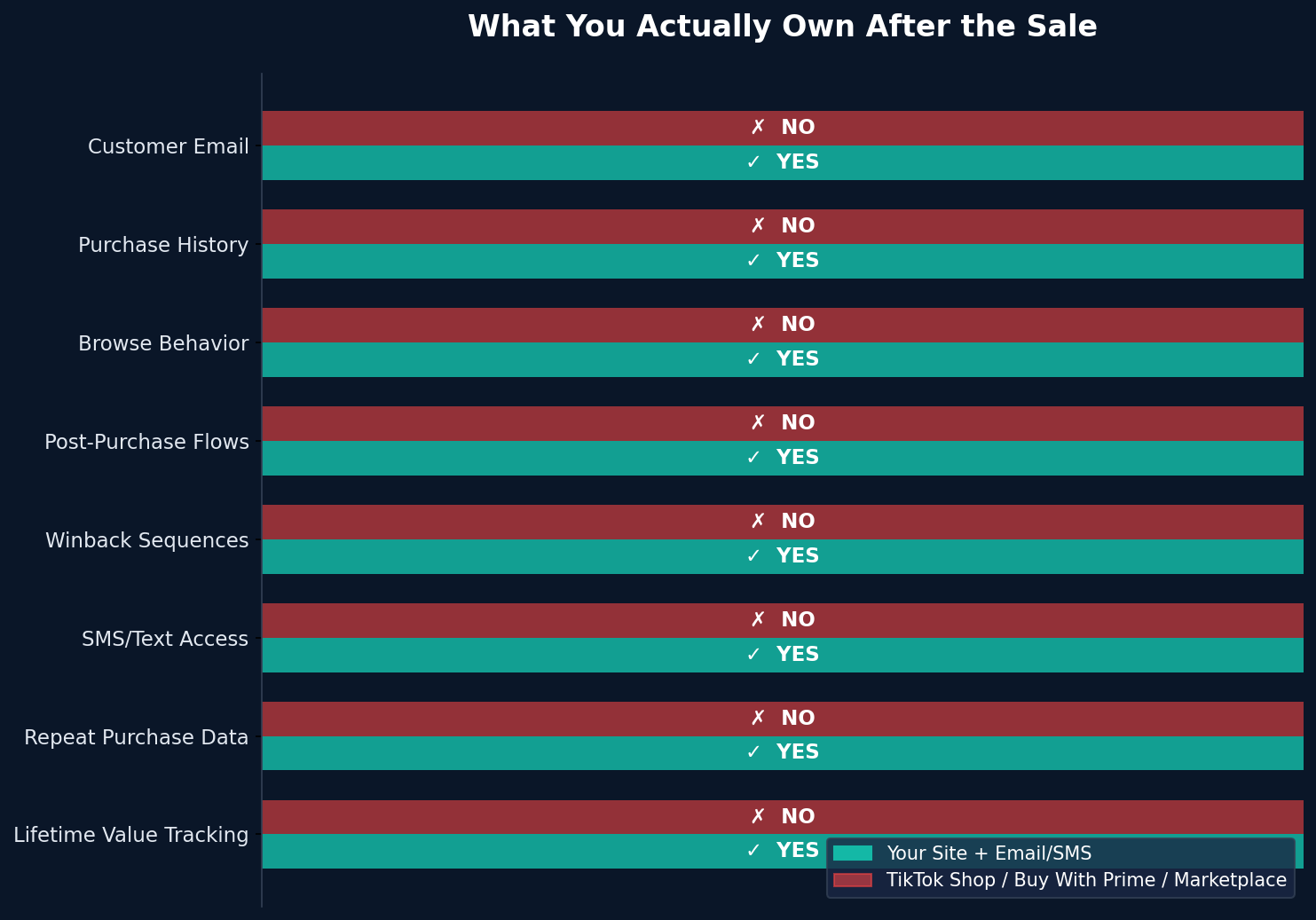
The brands running the math on this correctly aren't comparing channel CAC in isolation. They're looking at what happens after that first order. And on most marketplace channels, what happens after is: nothing. You made a sale. You don't own the customer. You can't email them. You can't text them. You can't build a relationship that turns into a second, third, fourth purchase.
TikTok Shop Didn't Kill Email. It Made It Easy to Forget.
TikTok Shop is genuinely good at what it does. The discovery engine is strong, the conversion rates on live shopping are real, and for certain product categories it's a legitimate acquisition channel.
But TikTok Shop didn't kill email. It just made it easy to forget why you built a list in the first place.
When you sell through TikTok Shop, TikTok owns that customer relationship. You get a sale, they get the data. You can't drop that buyer into a post-purchase flow. You can't segment them by purchase behavior. You can't send them a replenishment reminder 45 days later when they're running low. That customer exists in TikTok's ecosystem, not yours.
And the moment TikTok changes its algorithm, raises its fees, or faces another round of regulatory pressure in the US, you're left with revenue that disappeared and no list to fall back on. We've watched this play out before. It happened with Facebook organic reach in 2014. It happened with Instagram shopping features. The platform giveth, and the platform absolutely taketh away.
Buy With Prime Will Hand You the Sale and Keep the Relationship
Buy With Prime is a different flavor of the same problem. Amazon's pitch is compelling: put the Prime badge on your own site, get higher conversion rates, tap into the trust that 200 million Prime members already have.
But here's what's actually happening. Buy With Prime processes the order through Amazon's infrastructure. That means Amazon gets the customer data. Amazon controls the post-purchase communication. Amazon decides what follow-up emails that customer gets.
You made the sale on your site. Amazon kept the relationship. That's the whole business model.
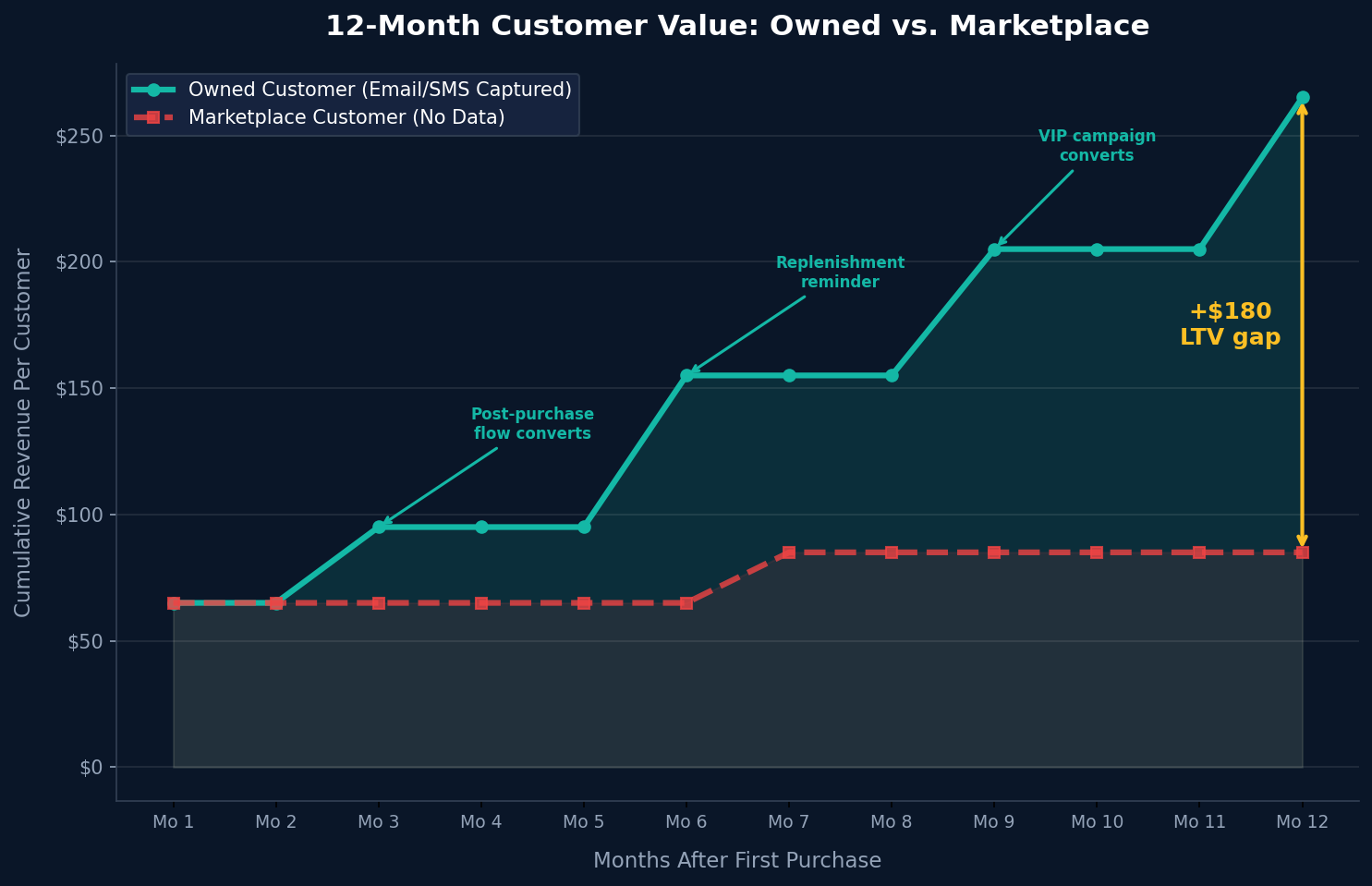
For brands running at scale, the math gets ugly fast. You're converting at maybe 15-20% higher rates on Buy With Prime orders, but you're losing the ability to remarket to those customers. If your email program generates even 25-30% of your revenue - which is typical for well-run DTC brands - the lifetime value gap between an owned customer and a Buy With Prime customer is massive.
You Can't Win Back a Customer You Never Actually Owned
This is the part that really gets missed in the "diversify your channels" conversation. A winback flow only works if you had the customer in the first place. You can't send a "we miss you" email to someone who bought through TikTok Shop and never gave you their email address. You can't trigger a lapsed-purchaser SMS to someone whose order went through Buy With Prime.
Your entire retention stack - the welcome series, the post-purchase flow, the browse abandonment triggers, the VIP segments, the winback sequences - all of it depends on one thing: you actually own the customer relationship. The moment you cede that to a marketplace, your retention engine has nothing to work with.
We manage retention programs across about 20 brands, and the pattern is consistent. The brands that invest heavily in marketplace channels without a parallel strategy for capturing customer data end up with impressive top-line revenue and terrible repeat purchase rates. They're spending to acquire the same customers over and over because they never owned them in the first place.
The Play Isn't "Email or Marketplaces." It's "Marketplaces as Feeders."
This isn't an argument against selling on TikTok Shop or using Buy With Prime. Those are real channels with real volume, and ignoring them entirely is its own kind of mistake.
The play is using marketplace channels as acquisition feeders, not as your primary customer relationship. Sell on TikTok Shop, but build an insert strategy that drives those customers to your site for their second purchase. Use Buy With Prime to convert hesitant first-time buyers, but have a plan to capture their email on the next interaction.
The brands getting this right treat every marketplace sale as a lead, not a customer. The customer doesn't exist until they're in your CRM, on your list, inside your flows. Everything before that is just a transaction.
Owned channels aren't sexy right now. Email open rates don't go viral on LinkedIn. Nobody's posting TikToks about their browse abandonment flow. But when the algorithm shifts, when the platform raises fees, when the marketplace decides to compete with you directly - the brands that still own their customer relationships are the ones that survive.
Everyone else is just renting.


