Wall art and mural brands sit on more customer data than almost anyone in ecommerce. And most of them do absolutely nothing with it.
Think about what happens when someone shops for a custom wall mural. They browse designs. They might upload a photo of their room. They choose a specific style, a specific size, specific colors. Then they order a sample - maybe two or three samples - bring them home, hold them up against the wall, and try to imagine what that design looks like at full scale.
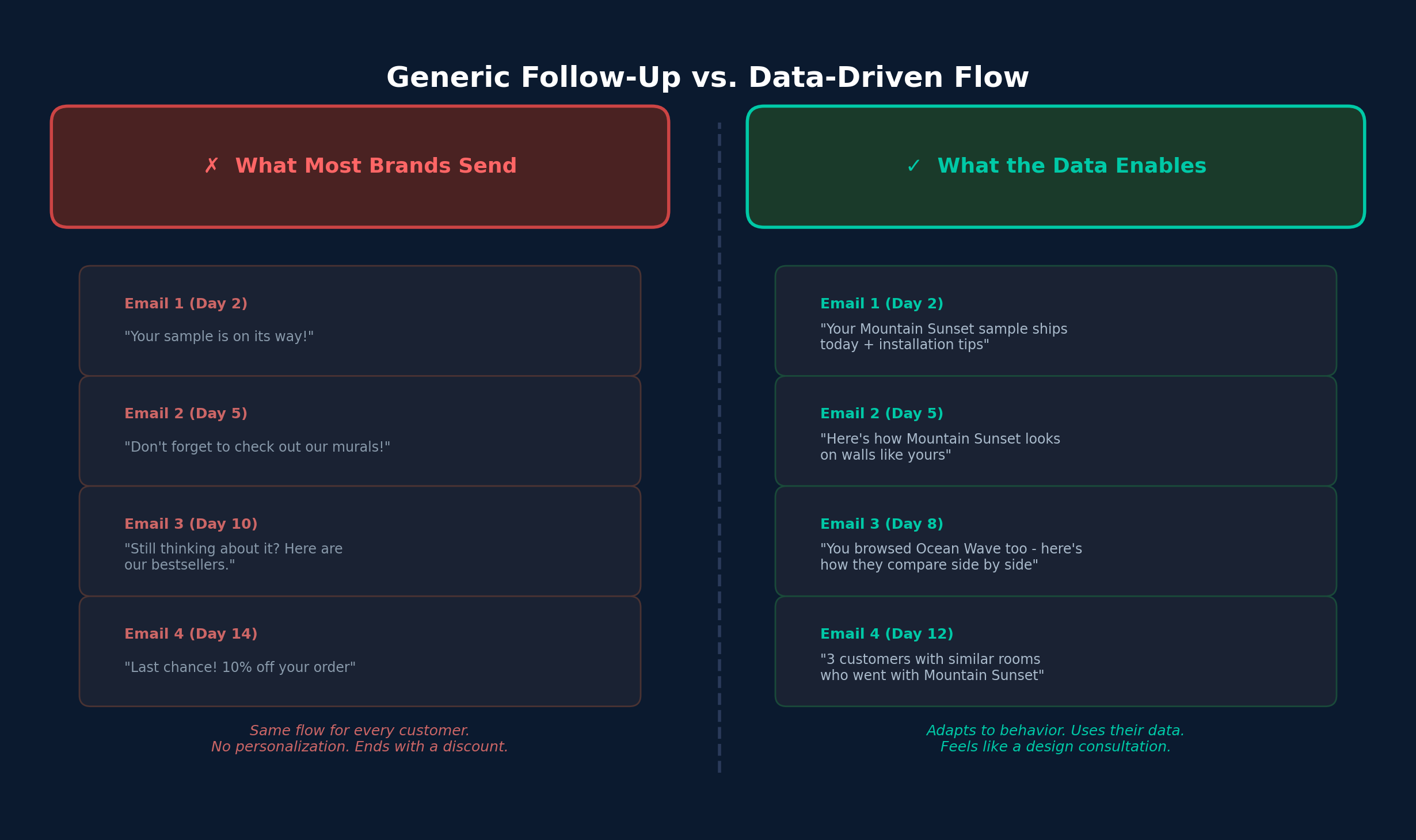
That's an incredible amount of intent data. And the follow-up email most of these brands send? "Hey, don't forget about your sample order!" Like it's a pair of socks sitting in a cart.
The Sample Gap Is Where You Win or Lose
Here's the thing about wall art and mural purchases - they're not impulse buys. Nobody wakes up and says "I need a mural today." This is a considered, personal design decision. The person buying is thinking about their living room, their office, their kid's bedroom. They're thinking about whether it matches their furniture, whether the quality holds up, whether it's going to be a pain to install.
That's why samples exist. But samples also create a gap - a window between "I'm interested" and "I'm ready to buy" that most brands fill with nothing useful.
We manage accounts across home and outdoor living, and one pattern we see constantly is that brands treat the sample-to-purchase window like a standard cart abandon. It's not. This is a completely different mindset. The person already bought something. They have your product in their hands. What they need now isn't a reminder - it's help making a decision.
One Sample Versus Three Samples Tells You Completely Different Stories
If someone ordered a single sample, they're probably down to one option and just need to validate. They want to touch it, see the quality, maybe test how easy it is to apply and remove. The objection they're sitting on is usually pretty narrow - quality, installation difficulty, or just "will this actually look good at scale?"
If someone ordered three or four samples? Totally different situation. They're still deciding. They might love multiple options and can't choose. They might be comparing textures or styles. The email flow for this person needs to help them narrow down, not remind them to buy.
Most wall art brands don't split these paths. Everyone gets the same post-sample follow-up, which means the brand is speaking to nobody specifically.
Your Customers Are Literally Showing You Their Room
Here's where it gets interesting, and where most brands completely miss the opportunity.
A lot of wall art and mural sites now have visualizer tools - AI-powered features where customers upload a photo of their room and see what a design would look like on their wall. Some brands build these custom, some use third-party tools. Either way, these tools exist and customers are using them.
When someone uploads a photo of their living room and drops a mural design onto it, they just gave you an incredible amount of information. You know what their space looks like. You know what design they were drawn to. You know what style resonates with them.
And what do most brands do with that data? Nothing. It stays in the visualizer tool and never touches the email flow.
Imagine getting an email that says: "Here's the Mountain Sunset mural you previewed in your living room - and here are two similar designs that work with that same wall." That's not a marketing email. That's a personal design consultation delivered to your inbox.
Compare that to "We noticed you were browsing our murals! Here are our bestsellers." One of these converts. The other gets deleted.
The Flow Architecture That Actually Works
The right setup for a wall art or mural brand isn't one post-sample flow. It's a branching system that adapts based on what the customer actually did.
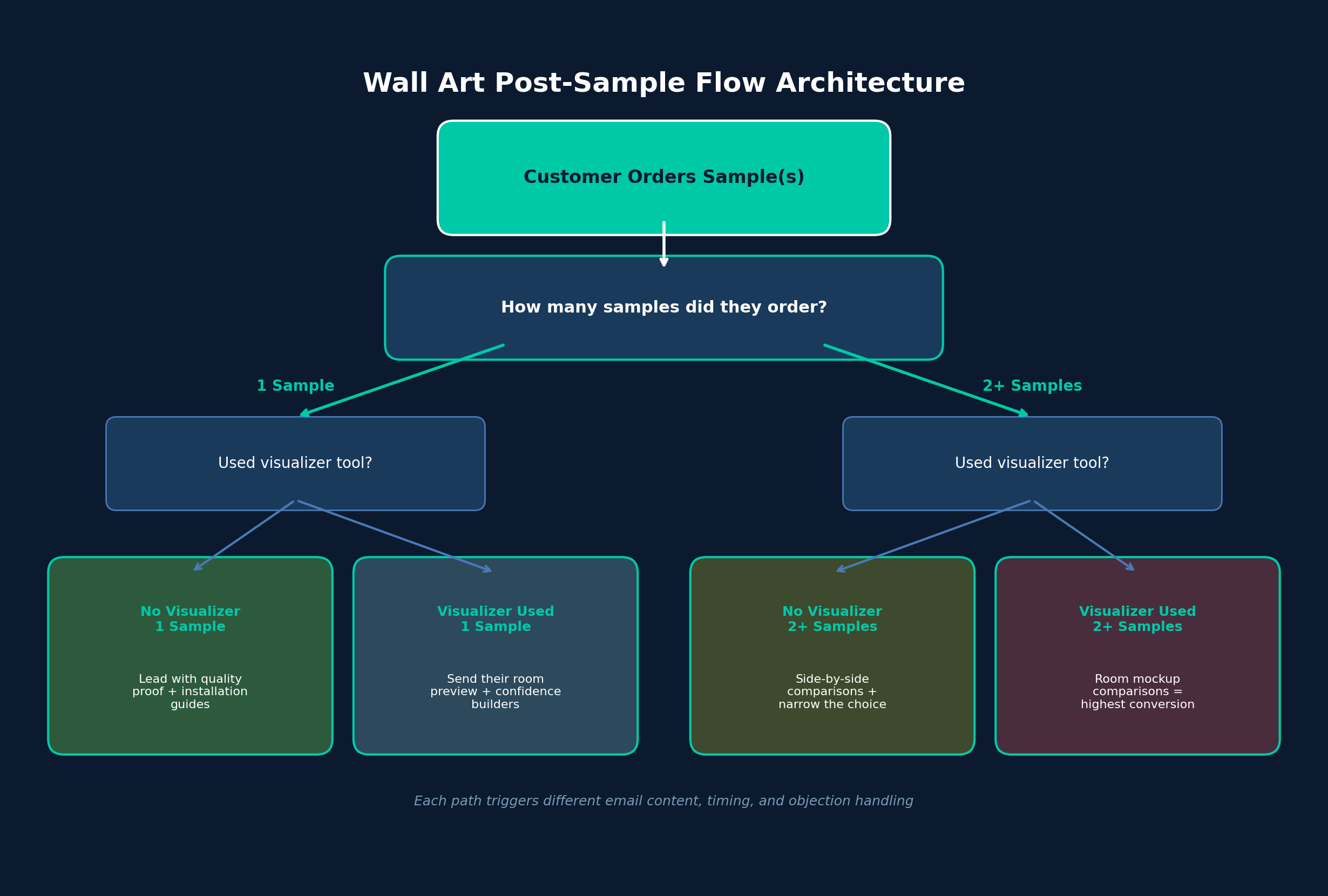
Single sample, no visualizer used: The objection is probably quality or installation. Lead with social proof around ease of application, before/after photos from real customers, maybe a quick video showing installation. Address the "is this going to be a nightmare to put up and take down" question directly.
Single sample, used the visualizer: They already like the design. They already see it in their space. The gap is confidence. Send them the visualization they created - if your tools capture that - and pair it with reviews from customers who had the same hesitation. This person is close. Don't oversell.
Multiple samples, no visualizer: They're comparing. Help them compare. If your tech stack allows it, show side-by-side options. Highlight the differences in texture, finish, and style between what they ordered. Ask them directly: "Which room is this for?" That question alone can reshape the recommendation.
Multiple samples, used the visualizer: This is your best conversion opportunity. You potentially have their room photo, multiple design preferences, and engagement data from the visualizer. Send them a curated comparison - "Here's Design A in your space versus Design B." Make the decision easy. This person wants to buy. They just need to feel sure.
The Return Visit Signal Most Brands Miss
There's one more data point that's extremely underused: whether the customer came back to the site after ordering samples.
If someone ordered samples and then came back three days later to look at different wallpapers or murals, that tells you something specific. Maybe the samples didn't match what they expected. Maybe they want to explore adjacent styles. Either way, that return visit is a signal that the person is still engaged but pivoting.
Most brands don't trigger anything off this behavior. But it's the perfect moment for a "we noticed you were looking at some new options - here's how they compare to the samples you already have" email.
The goal isn't to be creepy. It's to be useful. When someone is in the middle of a design decision for their home, the brand that helps them decide wins.
This Isn't Just Wall Art
The principles here apply to pretty much any home and outdoor living product where the purchase is personal, visual, and high-consideration. Custom tile brands, outdoor furniture companies, home decor brands - any category where the customer is designing a space, not just adding something to a cart.
The thread that runs through all of it: these customers give you more about themselves than almost any other ecommerce vertical. The brands that build flows around that data - instead of treating every buyer like a generic browse abandoner - are the ones that close.
Your tech stack determines how far you can take this. But even without a fancy AI visualizer, the basic framework still works. Sample quantity, return visits, browsing patterns after purchase - that's all available in your standard Klaviyo setup. You just have to build the flows that use it.


