Gmail is blocking 23% more DTC messages than it was a year ago. And the worst part isn't the blocking itself - it's that most brands have no idea it's happening.
A recent agency audit of a $14M apparel brand found their inbox placement was sitting at 61%. Their ESP was showing a 38% open rate, which looked fine on the surface. But when they dug into actual Gmail opens - real humans opening real emails in real inboxes - that number was closer to 9%.
That's the gap we're talking about. And it's wider than most people realize.
Your Delivery Rate Is Not Your Inbox Placement Rate
This is the part that trips up almost everyone. When you open Klaviyo and see a 97% delivery rate, that number just means "accepted by the mail server." It doesn't mean the email hit the inbox. It means the server didn't bounce it.
Sent minus bounced is effectively your delivery rate. And that's it. That email could be sitting in promotions, or in spam, or in some folder your customer hasn't checked since 2023. The delivery rate doesn't distinguish between any of those destinations.
So when your delivery rate looks healthy but your open rates have been slowly declining, that's your first clue. The emails are technically being "delivered." They're just not being seen.
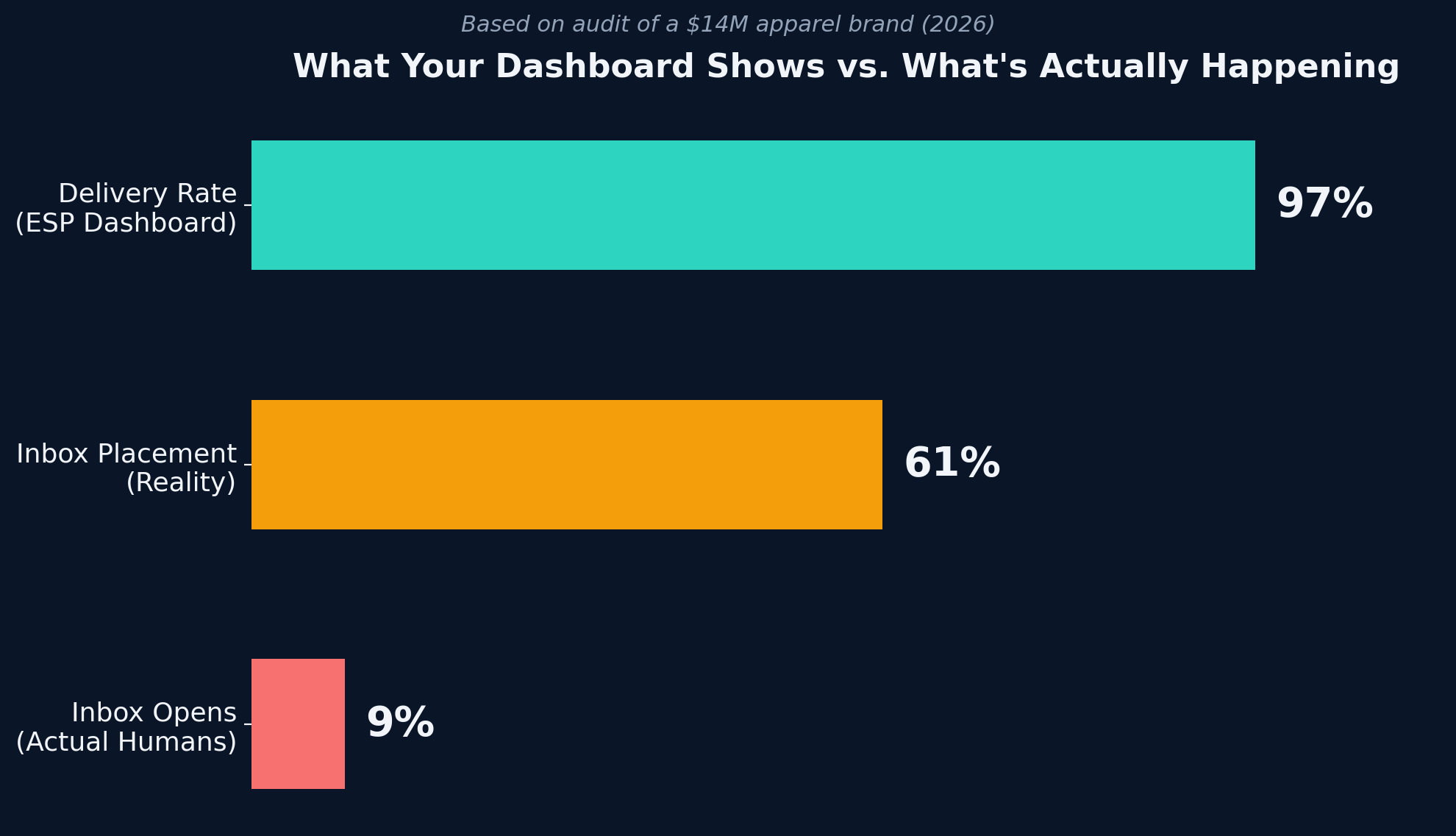
Industry benchmarks that used to show 92-95% inbox placement are now landing closer to 74-81% for brands that haven't updated their technical setup. And promotional email open rates have dropped from 22.1% in Q1 2025 to 16.8% in Q2 2026, according to Mailchimp's benchmark data. That's not a small shift.
What Actually Changed
The roots of this go back to Gmail and Yahoo's sender policy changes, but what made 2026 different is that what used to be "best practices" became mandatory. SPF, DKIM, DMARC - these used to be the things your email person recommended and maybe half of brands actually implemented. Now if you don't have all three properly configured, you're getting filtered before your content even matters.
But the technical side is only half the story. The engagement side has gotten stricter too. If you're sending to stale lists - people who haven't opened in 90 or 120 days - the email providers are watching. Higher spam rates, lower open rates, more complaints. All of these signals are weighted more heavily now.
The timelines are less forgiving than they used to be. A few years ago, you could get away with sending to your entire list and slowly cleaning things up if engagement dipped. That window has shrunk. If your list hygiene isn't proactive, you're going to feel it in your inbox placement pretty quickly.
The Revenue Math
Here's where this gets expensive. For a store generating $50K per month from email, even a 10-15% drop in inbox placement translates to $5K-$7.5K in revenue that vanishes every month. That's not hypothetical - that's money from emails that were written, designed, scheduled, and sent, but never reached the inbox.
And the gap between brands that take deliverability seriously and those that don't is getting wider. Cart abandonment flows generate an average of $3.65 in revenue per recipient. But top performers? $28.89 per recipient. That's an 8x gap, and deliverability is one of the biggest drivers of it. If your abandoned cart email lands in spam, it doesn't matter how good the copy is.
The breakdown by brand type tells the story pretty clearly:
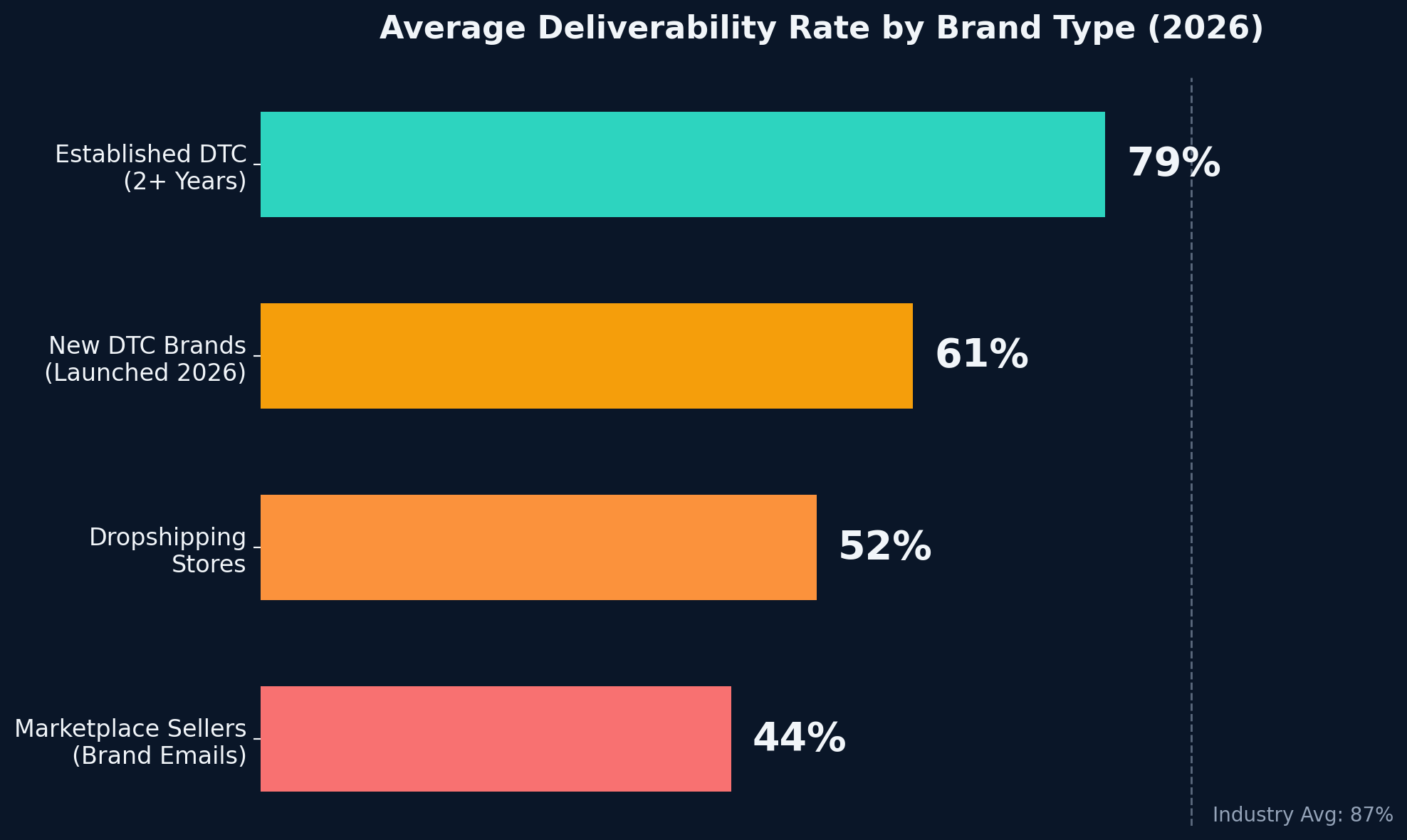
If you're a newer brand or selling on marketplaces, you're potentially losing half your emails before they even have a chance.
What You Can Actually Do About It
None of this is unfixable. But it does require treating deliverability as a priority instead of something you check once during onboarding and then forget about.
Get the technical foundations right. SPF, DKIM, and DMARC need to be properly configured - not just set up, but validated. We see brands all the time that think they're good because they added a DNS record two years ago, but something changed with their domain or provider and they're now failing authentication checks. Verify it. Don't assume.
Use subdomains for promotional vs. transactional email. This is one of the simplest things you can do that most brands still aren't doing. Your order confirmation and shipping notification emails should not be coming from the same sending reputation as your promotional campaigns. They're treated differently by the mail servers, and you should be treating them differently on your end too.
Trim your list. This is the hardest one for people to accept. A 200K list where 40K people are actively engaged is worth less than a 40K list where almost everyone is opening. Sending to unengaged subscribers doesn't just waste money - it actively hurts your sender reputation, which makes it harder to reach the people who do want to hear from you.
Focus on 30-day and 60-day engagement windows. If someone hasn't opened in 90 days, they should be in a sunset flow, not in your next campaign blast.
Segment harder. Hyper-segmentation based on purchase behavior isn't just a personalization play - it's a deliverability play. Smaller, more targeted sends to people who are likely to engage will build a stronger sender reputation than broad blasts to your entire list.
Watch revenue per recipient, not just open rate. Open rates can be misleading, especially with machine opens still muddying the data. Revenue per recipient is going to give you a cleaner picture of whether your emails are actually reaching people who buy. If that number is declining while your list size is growing, deliverability is likely the culprit.
Consider your channel mix. Some brands are shifting more effort toward SMS, which bypasses the inbox placement issue entirely. That makes the most sense for higher-AOV products where the cost per message is justified. For most brands though, the answer isn't to abandon email - it's to fix the deliverability problems so email can do what it's always done well.
The Bottom Line
Deliverability has always mattered, but the margin for error has gotten a lot smaller. The brands that are going to win on email in the back half of 2026 are the ones sending fewer, better emails to engaged audiences - not the ones blasting their entire list and hoping for the best.
If you haven't audited your inbox placement (not your delivery rate - your actual inbox placement) in the last 90 days, you should probably do that before you plan your next campaign. The gap between what your dashboard shows you and what's actually happening might be bigger than you think.


