This is one of those categories where the standard email marketing playbook just doesn't apply. And it's not because cakes are hard to ship or because margins are tight - it's because the person buying the product is almost never the person eating it.
Think about it. When someone orders a specialty cake online, they're usually doing it for someone else. A birthday. An anniversary. A holiday. A graduation. Maybe a work event. The overwhelming majority of cake and bakery orders are gift purchases - and that changes everything about how your email strategy should work.
Most bakery brands treat their email flows the same way a supplement brand or a skincare brand would. Time-based replenishment. "It's been 30 days since your last order." Product recommendations based on what you bought last time. And that's all fine if you're selling something people consume regularly for themselves.
But nobody is reordering a three-layer coconut cake every 30 days. That's not how this works.
The Gift Economy Problem
When your product is overwhelmingly occasion-driven, the repeat purchase trigger isn't consumption - it's the calendar. Your customer's sister's birthday is in three weeks. Their parents' anniversary is next month. The holidays are coming up. Those are the moments that bring them back.
So if you're building flows based on "time since last purchase" or "you might be running low," you're building off the wrong data entirely. And that's leading to a lot of missed revenue, because the intent to buy again is there - you just have to connect it to the right moment.
The contrast is pretty straightforward:
- Supplement brand: "You're probably running low on your vitamin D. Here's a quick reorder link."
- Cake brand: "Your mom's birthday is in three weeks. Last year you sent her the caramel pecan cake - want to surprise her again?"
Same concept - bring the customer back for another purchase. Completely different trigger.
Two Buyers, Two Completely Different Flows
Before you can build any of this, you have to segment your list into two fundamentally different buyer types: gift buyers and self-purchasers. These two groups need entirely separate flow logic.
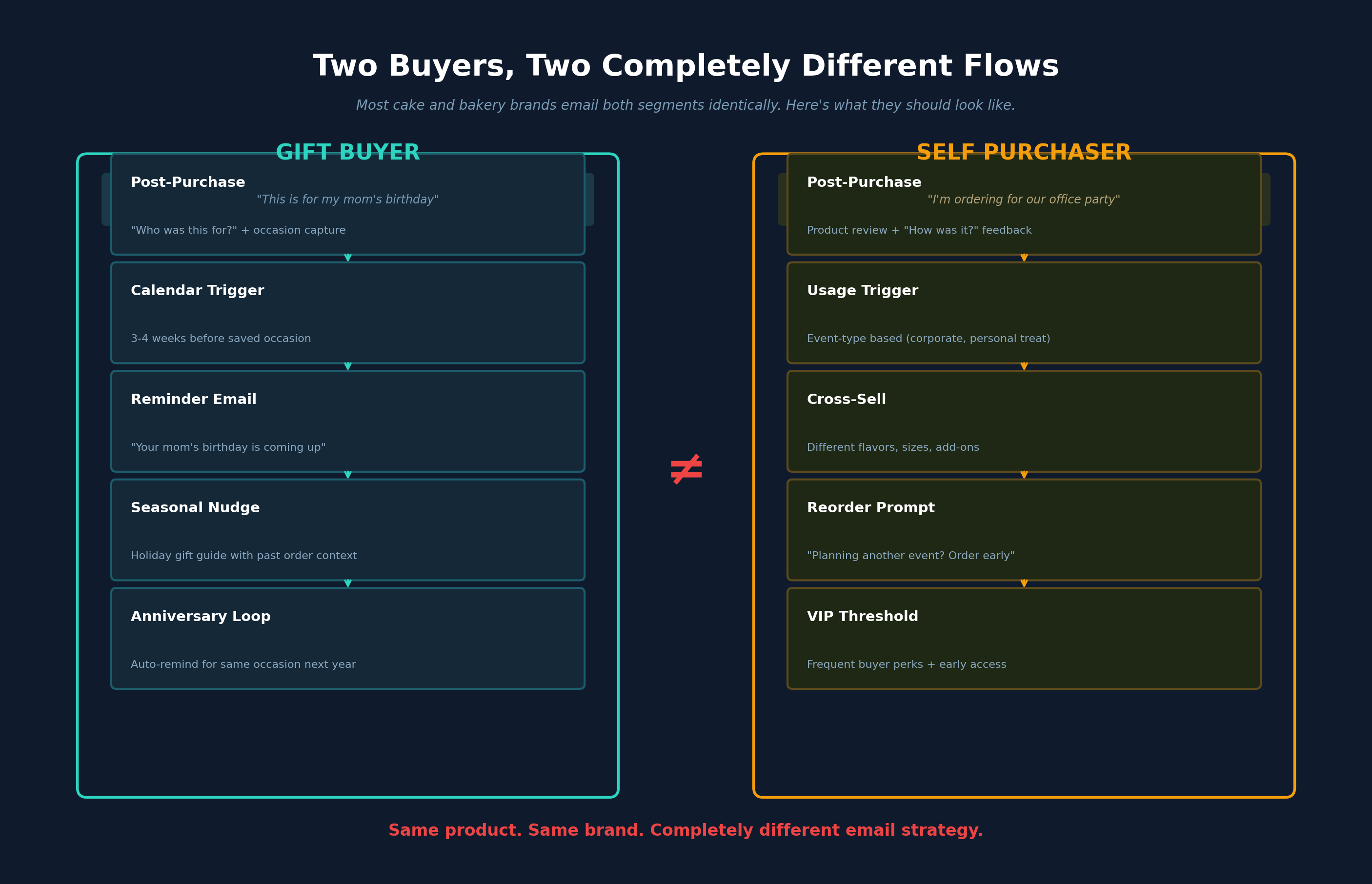
A gift buyer needs calendar-based reminders tied to the occasions they've already told you about. A self-purchaser - someone ordering for their own office party, or treating themselves - needs event-type prompts and cross-sell suggestions. Emailing both groups the same way is like running the same abandoned cart flow for a $15 item and a $500 item. It technically works, but you're leaving a ton of money on the table.
The Data You're Probably Not Capturing
Here's where most food and beverage brands fall short. They complete the sale, send a confirmation email, maybe trigger a review request a week later, and that's it. The transaction is done.
But with cake and bakery specifically, the most valuable data point isn't what they bought - it's who they bought it for and why.
A simple post-purchase email or SMS that asks two questions can change your entire retention strategy:
- "Who was this order for?" (Themselves, a family member, a friend, a coworker)
- "What was the occasion?" (Birthday, anniversary, holiday, just because)
If someone tells you they ordered a cake for their mom's birthday on March 15th, you now have a trigger you can use every single year. Three to four weeks before March 15th, you send a reminder. "Mom's birthday is coming up. Last year you went with the triple chocolate - want to do it again, or try something new?"
That's not a generic promotional email. That's a genuinely useful reminder that the customer actually wants to receive. And it converts at a completely different rate than a standard campaign blast.
Building the Calendar Loop
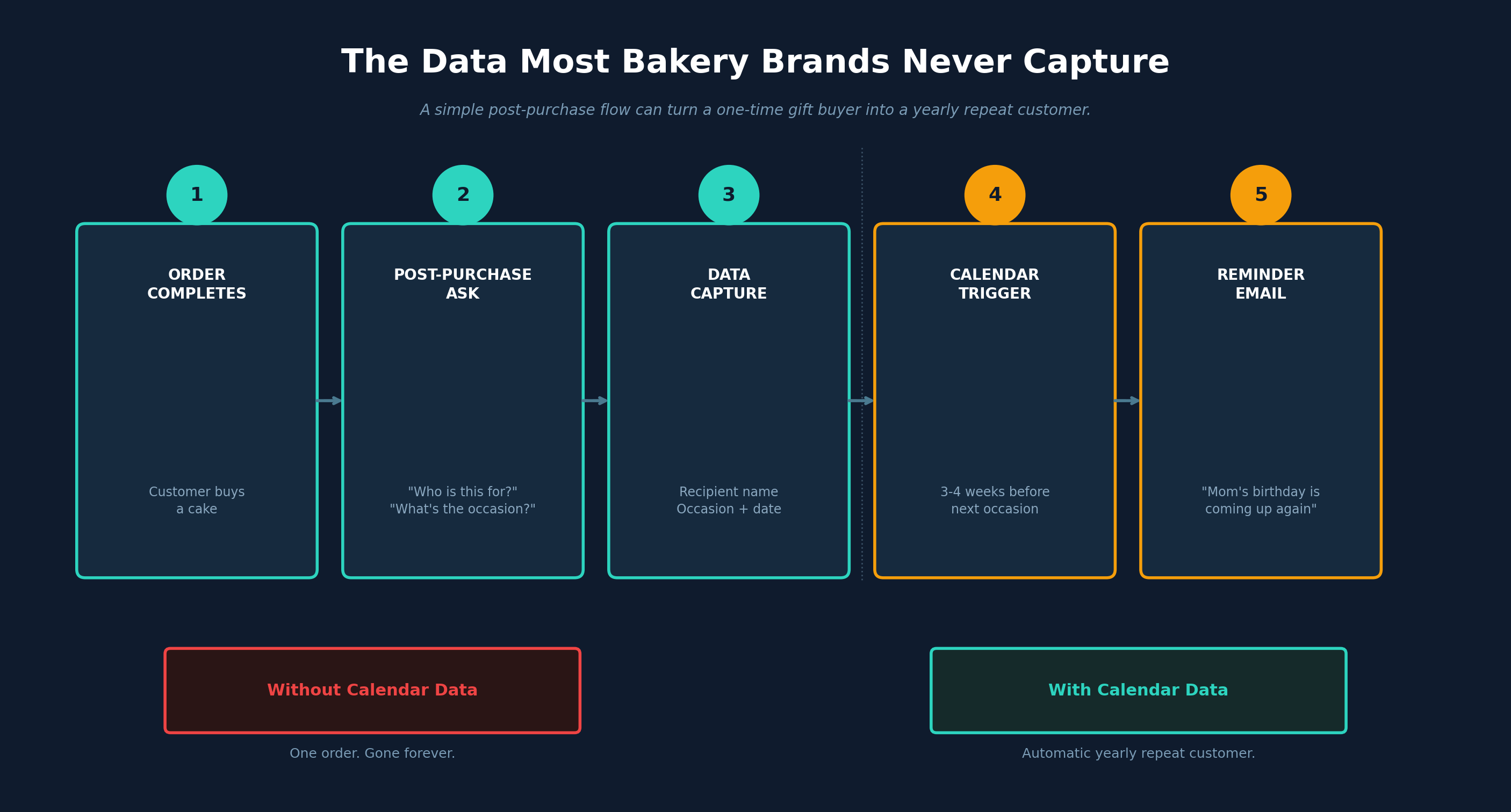
Once you have occasion data, you can build what we call a calendar loop - a flow that automatically re-engages gift buyers at the right time every year.
The basic structure looks like this:
- Post-purchase capture: Ask who the order was for and what the occasion was. You can do this via email, SMS, or even a simple survey link in your order confirmation. Some brands add a field at checkout - "Is this a gift?" with an optional occasion dropdown. Either way works.
- Date storage: Save the occasion date and recipient name as custom properties in Klaviyo (or whatever platform you're on). This is the part most brands skip, because it takes a few minutes to set up the property mapping.
- Calendar trigger: Set a flow that fires 3-4 weeks before each saved occasion date. That gives the customer time to browse, decide, and order with enough lead time for production and shipping.
- Reminder content: Reference the specific occasion and what they ordered last time. "Sarah's birthday is March 15th - last year you sent the lemon pound cake. Here are a few new options she might love." Personal, specific, helpful.
- Annual auto-renewal: The flow resets every year. Once someone is in the loop, they get reminded automatically for as long as the occasion keeps happening - which, for birthdays and anniversaries, is forever.
The brands that get this right don't need to run aggressive promotional campaigns to hit their revenue numbers. They have a built-in repeat purchase engine running in the background, triggered by dates their customers gave them voluntarily.
What About the Self-Purchaser?
Not every cake buyer is buying a gift. Some are ordering for corporate events. Some are treating themselves. Some are hosting a dinner party. These buyers still need a different approach than the standard "here's a coupon for your next order" follow-up.
For self-purchasers, the play is usually:
- Post-purchase feedback: "How was it?" review requests, because these buyers have actually tasted the product and can give you a real testimonial.
- Cross-sell based on context: If someone ordered a cake for an office party, suggest your corporate gifting options or catering-friendly sizes. If they ordered a single slice sampler, nudge them toward full-size options.
- Event-based reorder: "Planning another event? Order at least a week ahead for the best selection." Less calendar-specific, more situation-specific.
- VIP programs: Frequent self-purchasers are your highest-intent segment. Early access to seasonal flavors, loyalty perks, and first-to-know new product launches work well here.
This Isn't Just Cakes
The gift-buyer dynamic applies to a lot of food and beverage brands beyond bakeries. Specialty chocolate brands. Gourmet food gift boxes. Cookie companies. Even some seafood brands - you'd be surprised how many king crab orders are holiday gifts.
If a meaningful percentage of your orders are gifts, you're sitting on repeat purchase potential that standard email flows will never capture. The data is right there - you just have to ask for it.
Most brands don't. They let the first order happen, throw the customer into a generic post-purchase drip, and hope they come back on their own. For gift buyers, they usually don't - not because they didn't like the product, but because nobody reminded them when the next occasion came around.
That's the whole game. Capture the occasion. Save the date. Remind them before they forget.


