Every week, I talk to a brand founder who's either just listed on Amazon or is seriously thinking about it.
And honestly? I get it. The math looks good on paper. Amazon, Walmart, TikTok Shop - they put your product in front of millions of people who already have their wallet out. No CAC guesswork. No pixel headaches. Just list, ship, sell.
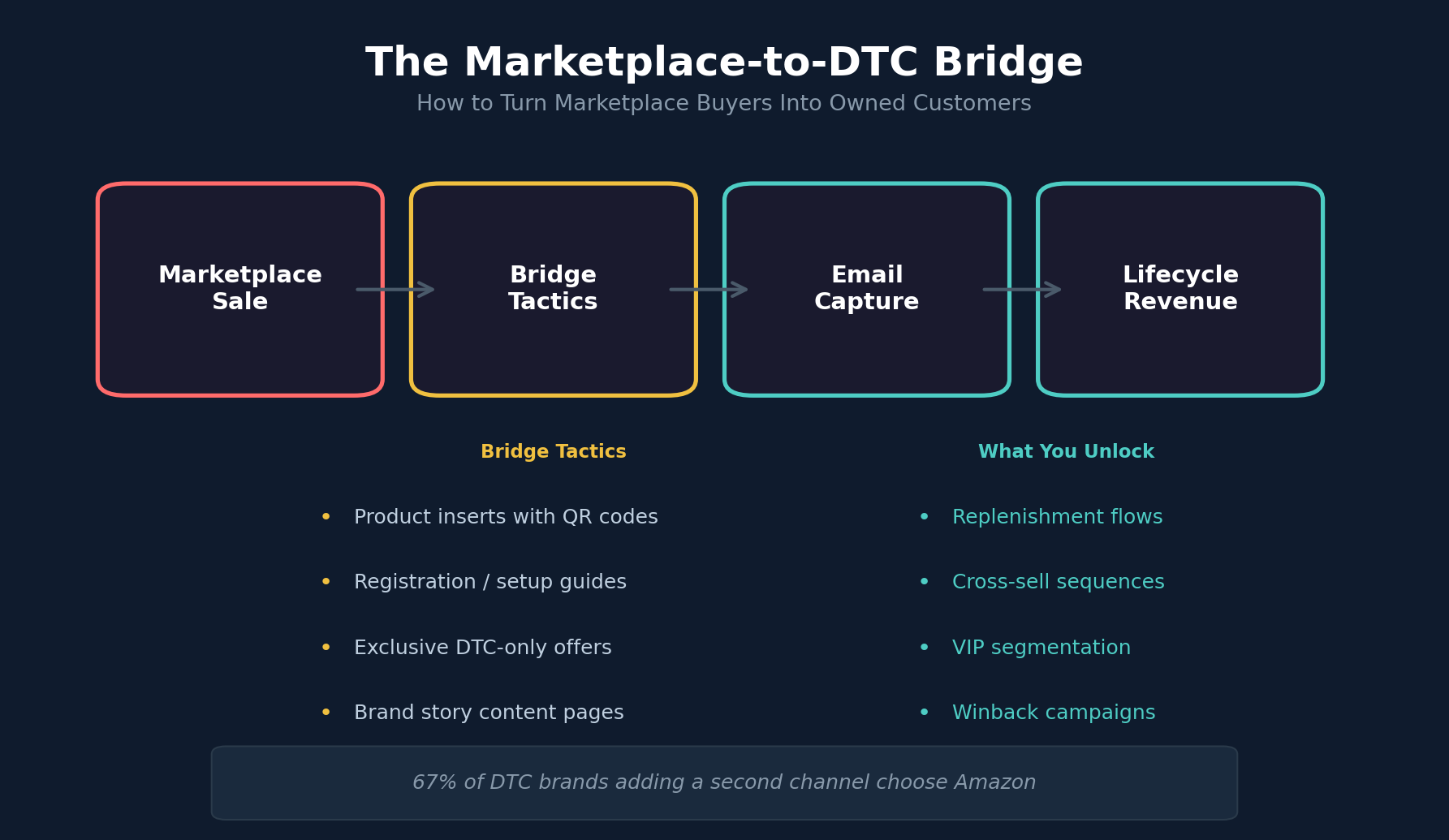
67% of DTC brands adding a second channel right now are choosing Amazon. Buy with Prime is pulling in brands that swore they'd never touch a marketplace. And some of them are doing real volume there.
So what's the problem?
Every Marketplace Sale Is a Customer You'll Never Email
That's the cost nobody talks about when they celebrate their first big Amazon month.
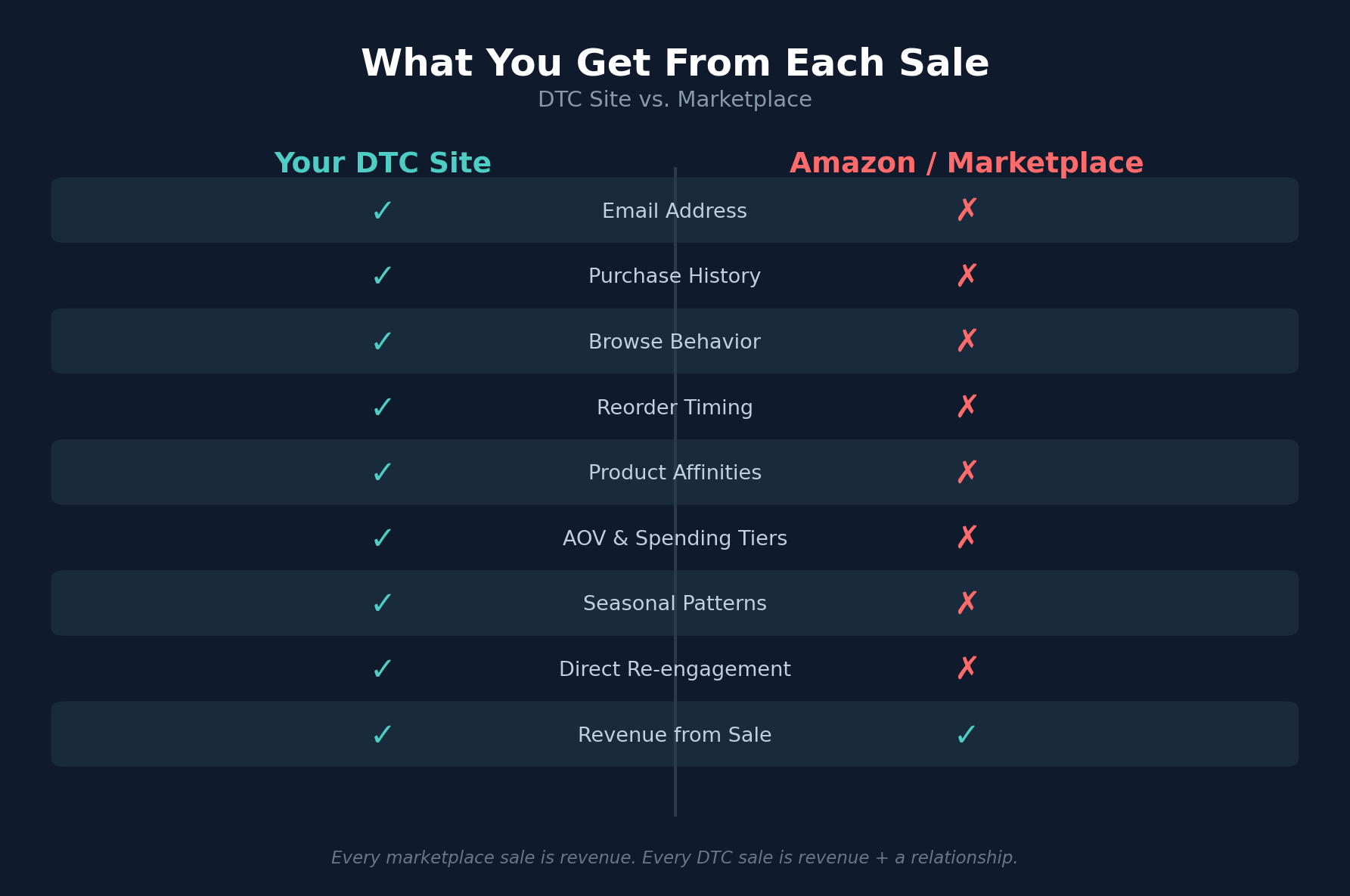
When someone buys your product on Amazon, you get a sale. Amazon gets the customer. You don't get their email. You don't get to follow up. You don't get to ask what they thought about it, suggest something complementary, or remind them to reorder before they run out.
That customer bought your product. They didn't enter your world.
And email still has the best ROI of any marketing channel - full stop. We see this across every account we manage. The brands printing money from retention aren't doing it through paid retargeting or social. They're doing it through email and SMS, with the customer data to back it up.
The Data You Lose Is Worth More Than the Sale
This is the part most brands underestimate.
When someone buys through your DTC site, you don't just get an email address. You get a window into who they actually are:
- What they buy. Not just this order - their entire purchase history over time.
- When they buy. Are they a seasonal buyer? Do they reorder every 6 weeks? Do they shop on Fridays at lunch?
- What else they buy alongside it. Product affinity data that tells you what to recommend next.
- How much they spend. AOV tiers that let you segment VIPs from one-timers.
- What time of year they spend the most. Holiday patterns, seasonal spikes, back-to-school behaviors.
All of that is data. And data, more than any single sale, is the real asset DTC brands are sitting on.
With that data, you can build email flows that actually match the customer's behavior - replenishment reminders timed to their cycle, cross-sell recommendations based on what similar buyers purchased, winback campaigns triggered at the exact moment engagement drops off.
On Amazon? You're guessing. Or worse, you're running PPC to re-acquire a customer who already bought from you.
The Brands Winning Right Now Are Playing Both Sides
I'm not saying don't sell on marketplaces. For a lot of brands, especially in food and beverage or consumables, Amazon is a legitimate acquisition channel. You'd be leaving money on the table by ignoring it.
But the brands doing this well treat marketplace sales as the first date, not the relationship. Their entire strategy centers on one question: how do we get this customer onto our list and back to our site?
Here's what that actually looks like:
Product inserts. Yeah, it's old school. A card in every Amazon package with a QR code to a landing page offering something exclusive - early access, a gift with their next direct order, a loyalty program enrollment. Amazon doesn't love this, but brands do it constantly. The conversion rates on these are surprisingly solid because you're catching someone at peak brand excitement - they just opened the box.
Post-purchase content. Build a registration or setup guide that requires visiting your site. Supplement brands do this with dosage guides. Grooming brands do it with routine builders. Cooking brands do it with recipe libraries. The product gets them there. The content captures the email.
Branded packaging that drives curiosity. Not every insert needs a hard sell. Sometimes a URL to your brand story, a founder video, or a behind-the-scenes page is enough. The goal is to create a second touchpoint on your turf.
Your Email List Is the Only Thing That Survives a Channel Shift
Here's the part that keeps me up at night when I see brands going all-in on marketplace channels: platforms change the rules whenever they want.
Amazon changes its fees every year. TikTok Shop's entire future in the US was in question six months ago. Instagram's shopping features have launched, pivoted, and relaunched more times than I can count.
Your email list doesn't have a terms of service update. Nobody can throttle your reach or raise your rates overnight. It's yours.
The brands that keep their DTC email list healthy while expanding to marketplaces? They win both ways. They get the marketplace volume AND they build the first-party data asset that lets them actually scale long-term.
The ones that let DTC atrophy because Amazon is "easier"? They wake up one day with great revenue numbers and no customer relationships.
The One Metric That Tells You If You're Doing This Right
Track your marketplace-to-DTC conversion rate. Of all the people who first discover you on Amazon or TikTok Shop, what percentage eventually make a purchase on your site?
If that number isn't growing, your marketplace strategy is just renting customers. You're paying for volume today with no path to owning the relationship tomorrow.
Because once someone's on your site and in your world, you're not just capturing an email. You're learning who they are. And that knowledge - not any single transaction - is what lets you keep that customer coming back, and what lets you actually build something that compounds.


