The New Geography Tax on Paid Social
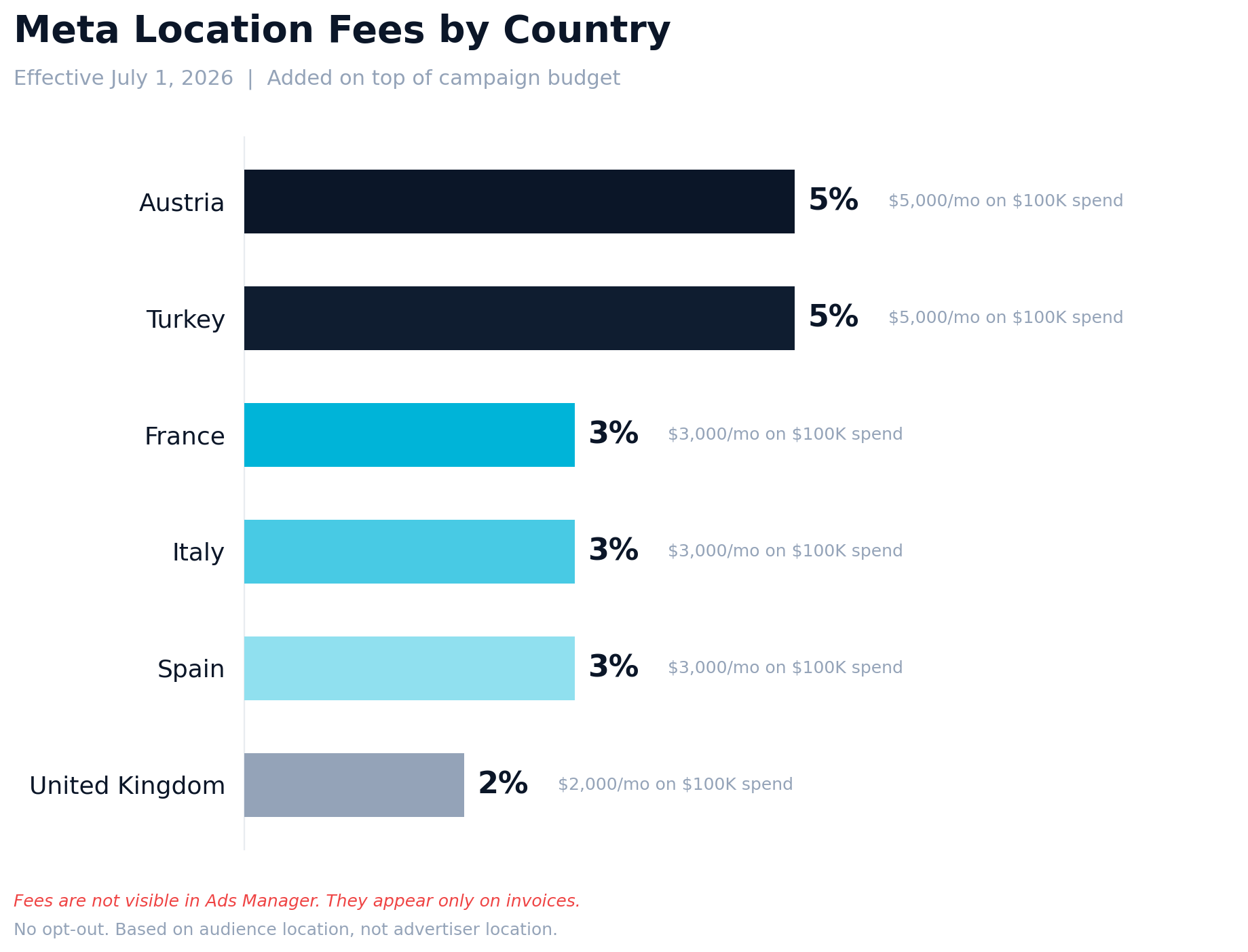
Starting July 1, Meta is adding location fees to every ad impression delivered in six European markets. Austria and Turkey get hit at 5%. France, Italy, and Spain at 3%. The UK at 2%.
These aren't deducted from your campaign budget. They're added on top of it, after delivery, as a separate line item on your invoice. Your Ads Manager dashboard won't show them. Your spend caps won't account for them. You'll just see a higher bill when it arrives.
There's no opt-out. The fee is based on where your audience is located, not where your business is. A US brand running ads to French shoppers pays the French 3% rate. A UK brand targeting only American audiences pays nothing.
And here's the part that should bother you: Meta absorbed these costs for years. Digital Services Taxes in these countries have been active since 2019 and 2020. Meta just decided it's done covering the tab.
Google already passes these through. Amazon does too. Meta is the last major platform to make this move. They won't be the last to add new markets to the list.
The Math Nobody Wants to Do
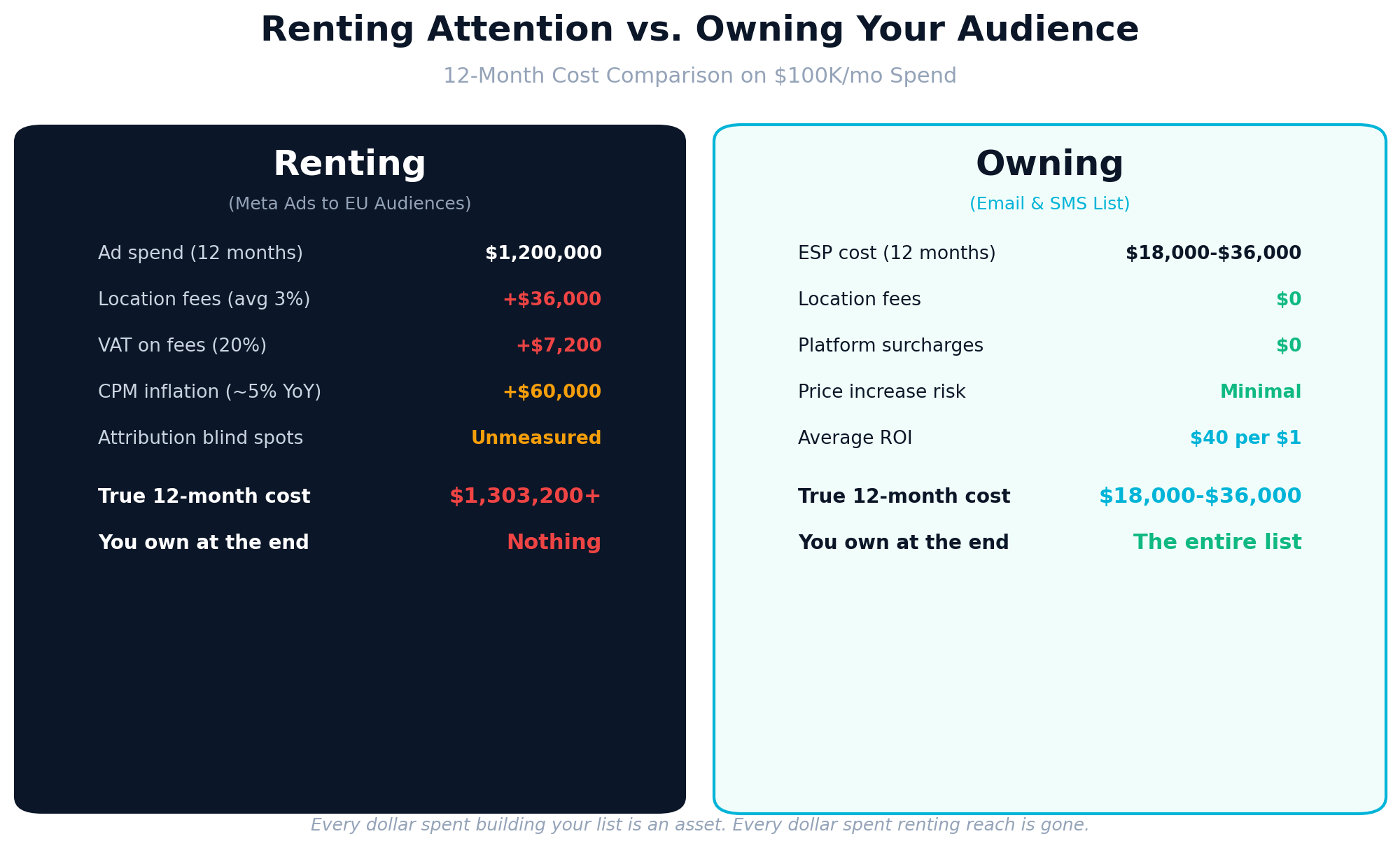
Let's say you're spending $150,000 a month on Meta targeting UK audiences. That's $3,000 a month in location fees you weren't budgeting for. $36,000 a year.
Running pan-European campaigns across the UK, France, Italy, and Spain? On a $200,000 monthly spend split across those markets, you're looking at $5,000 to $6,000 in fees every month. Before VAT, which compounds on top of the combined total.
But here's the real problem: your ROAS reporting doesn't know these fees exist. Ads Manager still shows your old spend numbers. Your in-platform ROAS looks the same as last month. The gap between what Meta reports and what you actually paid just got permanently wider.
Related: how Meta changed ROAS calculations
A campaign showing a 2.5x ROAS against $5,000 in Ads Manager spend? Once you add the UK's 2% location fee, your actual cost is $5,100. Your real ROAS is 2.45x. Scale that across a full year of European spend and those "profitable" campaigns start looking a lot tighter.
Platform Fees Stack
This is the part most brands miss. These fees don't arrive all at once. They stack.
In the past year alone, Meta has changed attribution windows, pushed everyone toward Advantage+ (which gives you less control over where impressions land), adjusted CPM pricing in competitive verticals, and now added country-level surcharges on top of your ad spend.
Related: why Meta CPMs keep climbing
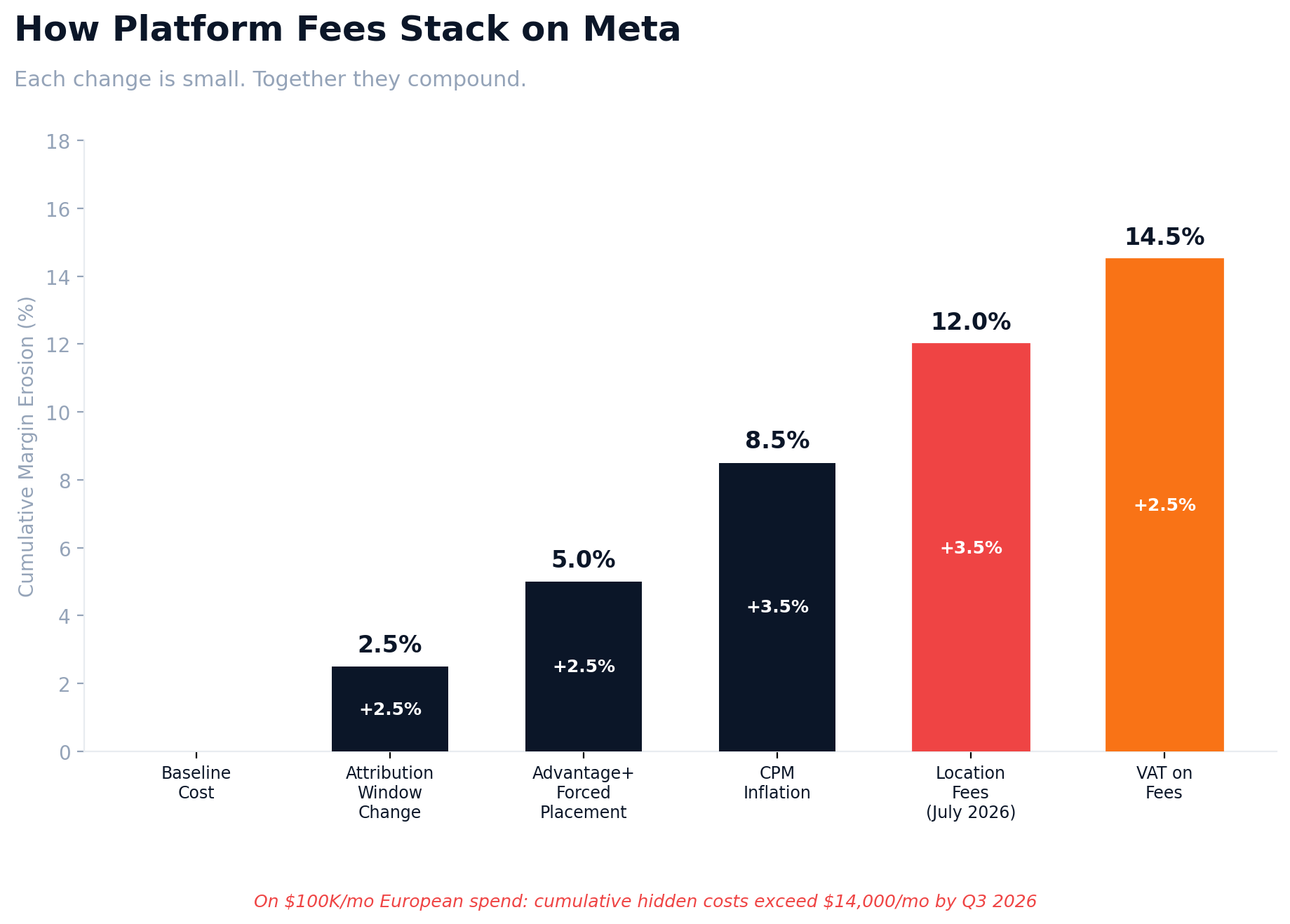
Each one of these is a 2-5% haircut on your margins. None of them individually feel like a crisis. But they compound. And every single one of them is Meta reminding you who actually owns your audience.
Spoiler: it's not you.
You are renting attention from a platform that keeps raising the rent. Every fee update, every algorithm change, every policy tweak is another line item you didn't budget for on a channel you don't control.
Email Doesn't Have a Geography Tax
You know what doesn't charge you more to reach someone in Austria vs. someone in Austin? Email.
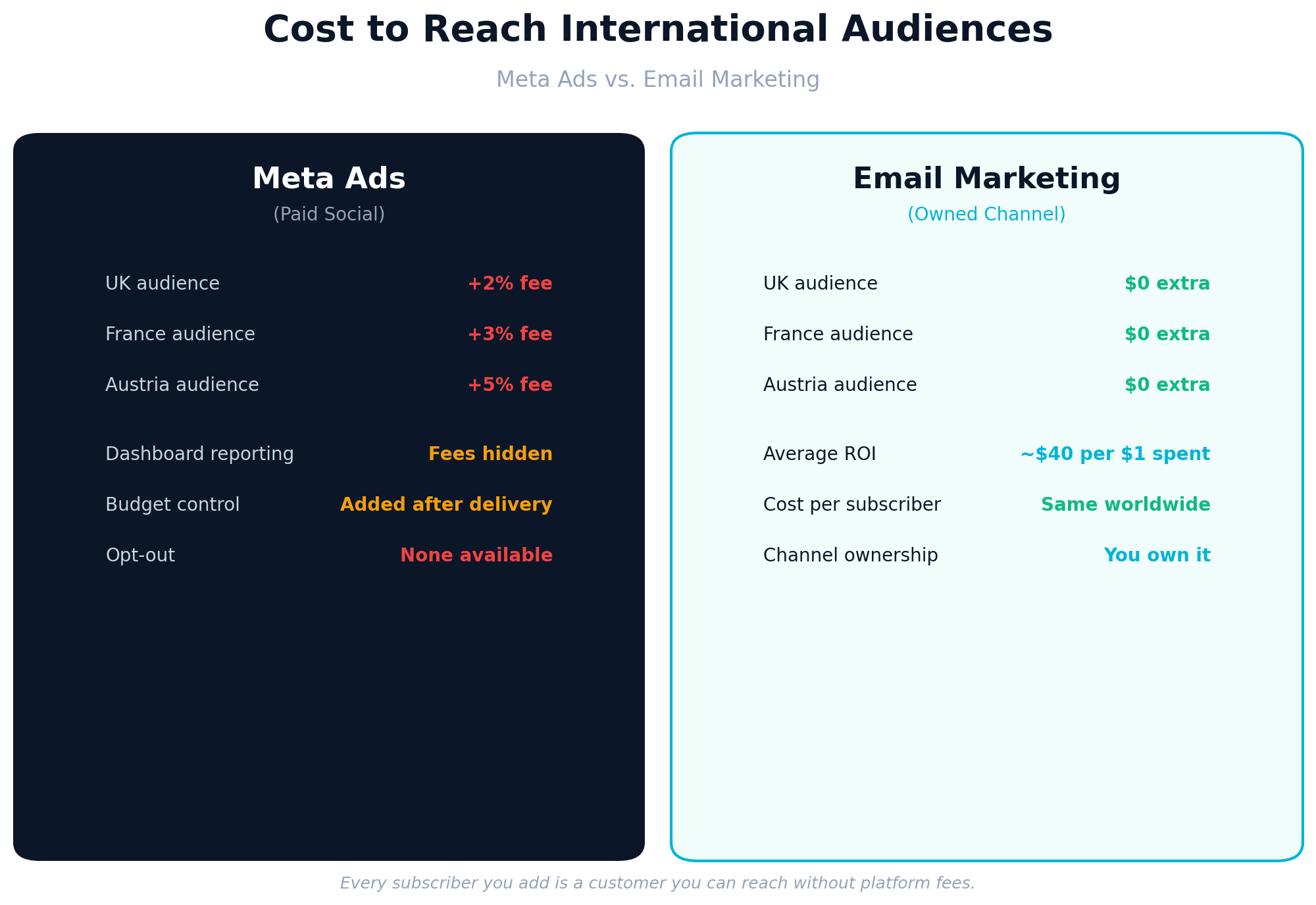
International scale used to be a flex on paid social. Now it's a fee. On email, reaching a subscriber in London costs exactly the same as reaching one down the street from your warehouse. No surcharges. No post-delivery invoices. No invisible line items that break your ROAS math.
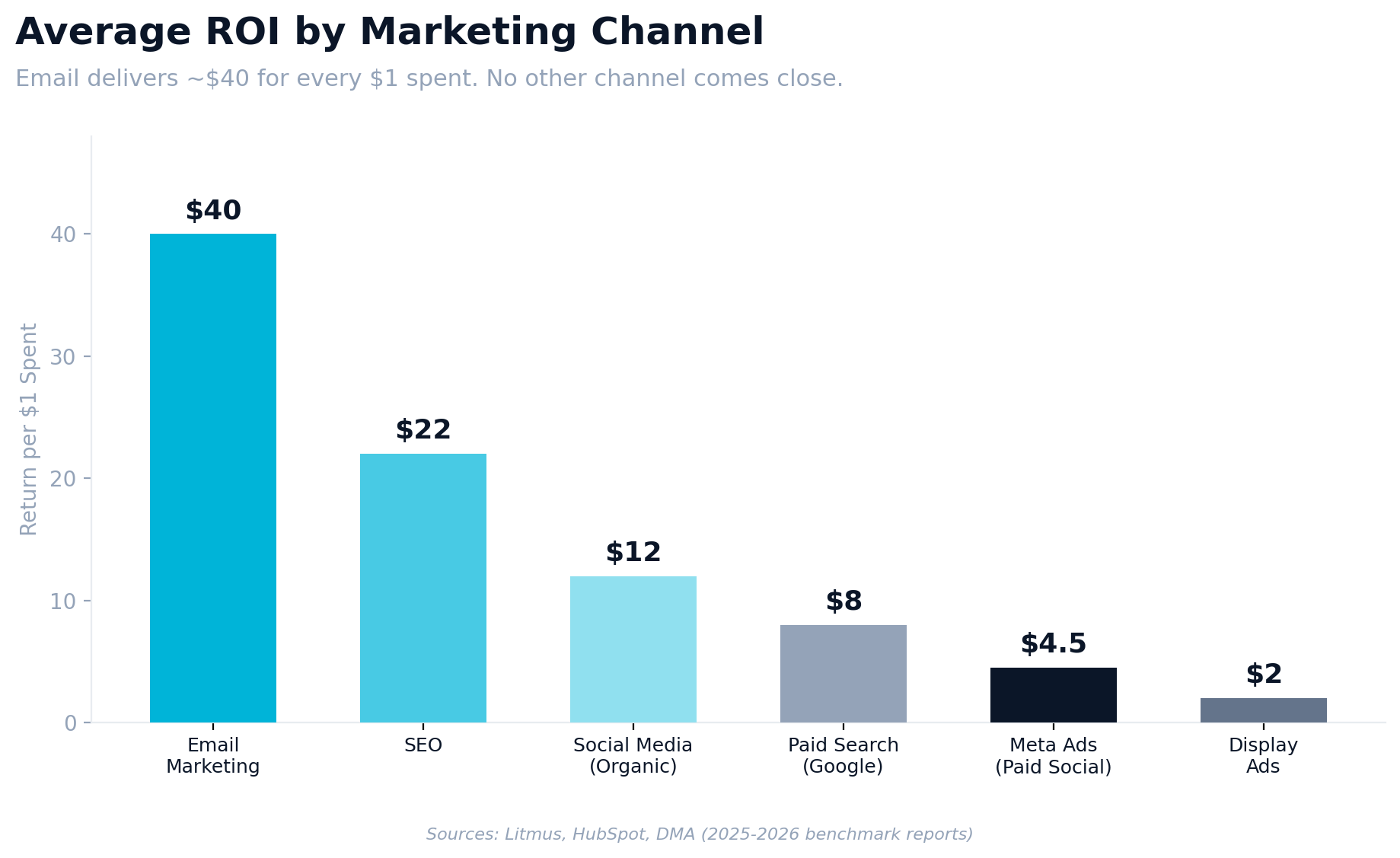
The average ROI on email marketing is roughly $40 back for every $1 spent. That number doesn't change because a government in Madrid decided to tax digital advertising revenue.
The Brands That Aren't Sweating This
The brands winning at retention right now aren't panicking over Meta's July 1 deadline. They built their email lists when it was easy. When CPMs were lower. When the acquisition math still worked without needing a spreadsheet and a prayer.
Now they're just watching everyone else run the numbers.
Paid acquisition still has a role. Nobody's saying turn off Meta entirely. But if you're paying more to acquire customers on paid and then paying more to retain them on paid channels too, you're just running faster on a treadmill someone else owns.
The play is the same as it's always been: use paid to fill the funnel, use email and SMS to keep people there. But with every fee Meta stacks on, the urgency to build owned channels gets less theoretical and more financial.
What to Actually Do Before July 1
If you're running Meta ads in any of those six countries, here's the short list:
Audit your geographic spend. Pull the last 90 days from Ads Manager, filter by delivery country. Figure out exactly how much of your spend lands in fee markets. If you're using Advantage+ with broad targeting, you might be delivering to these countries without realizing it.
Update your forecasts. Add the applicable fee rate to every projection for Q3 and beyond. If your finance team sees invoices 3-5% higher than expected without warning, that's a trust problem.
Fix your ROAS math. Your Ads Manager numbers are no longer your real numbers. Start pulling actual spend from your billing hub, not from campaign dashboards. The gap between reported and real spend is now permanent in these markets.
Build the list. Every subscriber you add to your email list is a customer you can reach for the cost of sending an email. No location fees. No algorithm changes. No surprise invoice line items. Just a direct line to someone who already told you they want to hear from you.
Meta just made owning your audience more expensive to skip. The email list was always the answer. Now it's the math.


