Every year, the same thing happens. Memorial Day wraps up, brands catch their breath, and then July 4th shows up on the calendar. Most teams do one of two things: they either skip it entirely ("we're not a patriotic brand") or they slap a flag graphic on a 25%-off email and call it a holiday campaign.
Both approaches leave money on the table. A lot of it.
The Real Problem Isn't the Holiday. It's the Playbook.
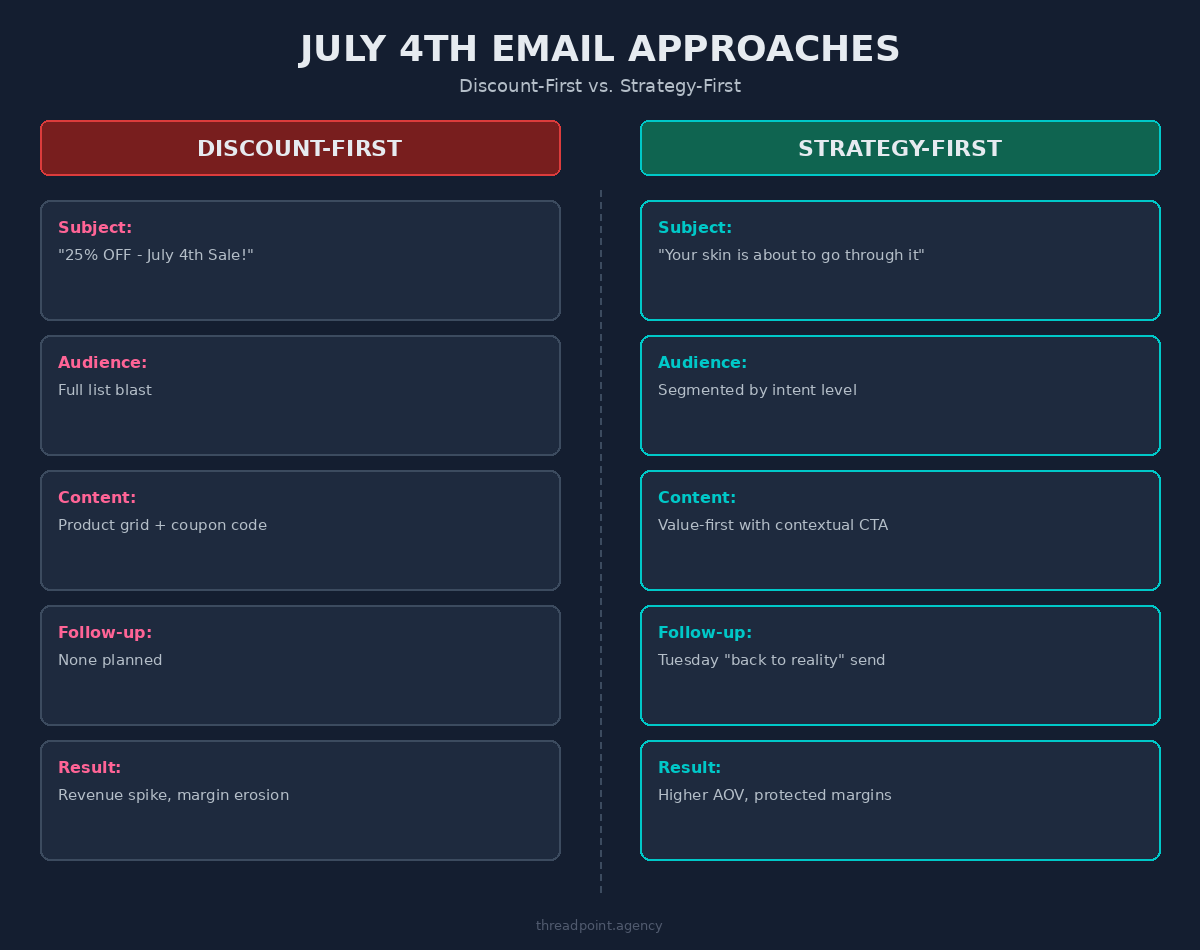
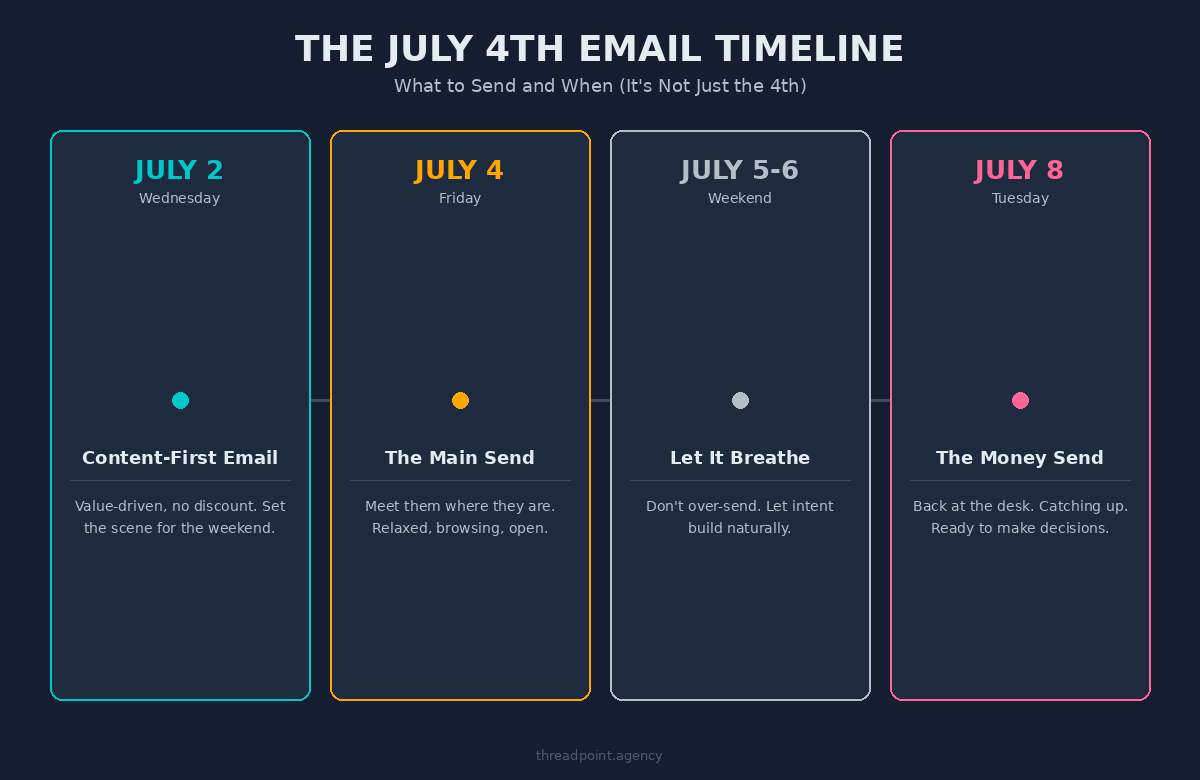
Here's what usually happens. Someone on the team says "we need a July 4th sale." So you pick a discount - 20%, maybe 25% - blast it to your full list on July 2nd, send a reminder on the 4th, and move on with your life.
The issue isn't that discounting doesn't work. It does. The issue is that you're discounting to people who were probably going to buy anyway. Your warmest segment - the people who've been browsing, adding to cart, opening every email - they don't need 25% off. They need a reason. And your coldest segment? They're not going to suddenly care about your brand because you attached a sparkler emoji to the subject line.
The discount becomes the strategy instead of supporting a strategy. And that's where the margin erosion starts.
Why July 4th Actually Works
Forget the holiday itself for a second. Think about the context.
It's a long weekend. People have genuine downtime - not the stressed-out, last-minute-gift-buying energy of Black Friday, and not the "I'm traveling and ignoring my inbox" vibe of late August. July 4th weekend hits this sweet spot where people are relaxed, happy, and actively on their phones.
They're sitting by the pool scrolling Instagram. They're waiting for the grill to heat up and checking email. They're in that summer vacation headspace where they're actually open to spending because they're not rushing through their day.
That's not a throwaway moment. That's one of the highest-intent windows of the summer.
We see it in the data across our accounts. July 4th weekend open rates tend to run 8-12% higher than a typical summer send. Click rates hold steady or climb. And the people who do convert tend to have higher AOVs than your average promo buyer - because they're not just hunting for a deal. They're browsing with actual interest.
Stop Leading With the Discount. Lead With the Customer.
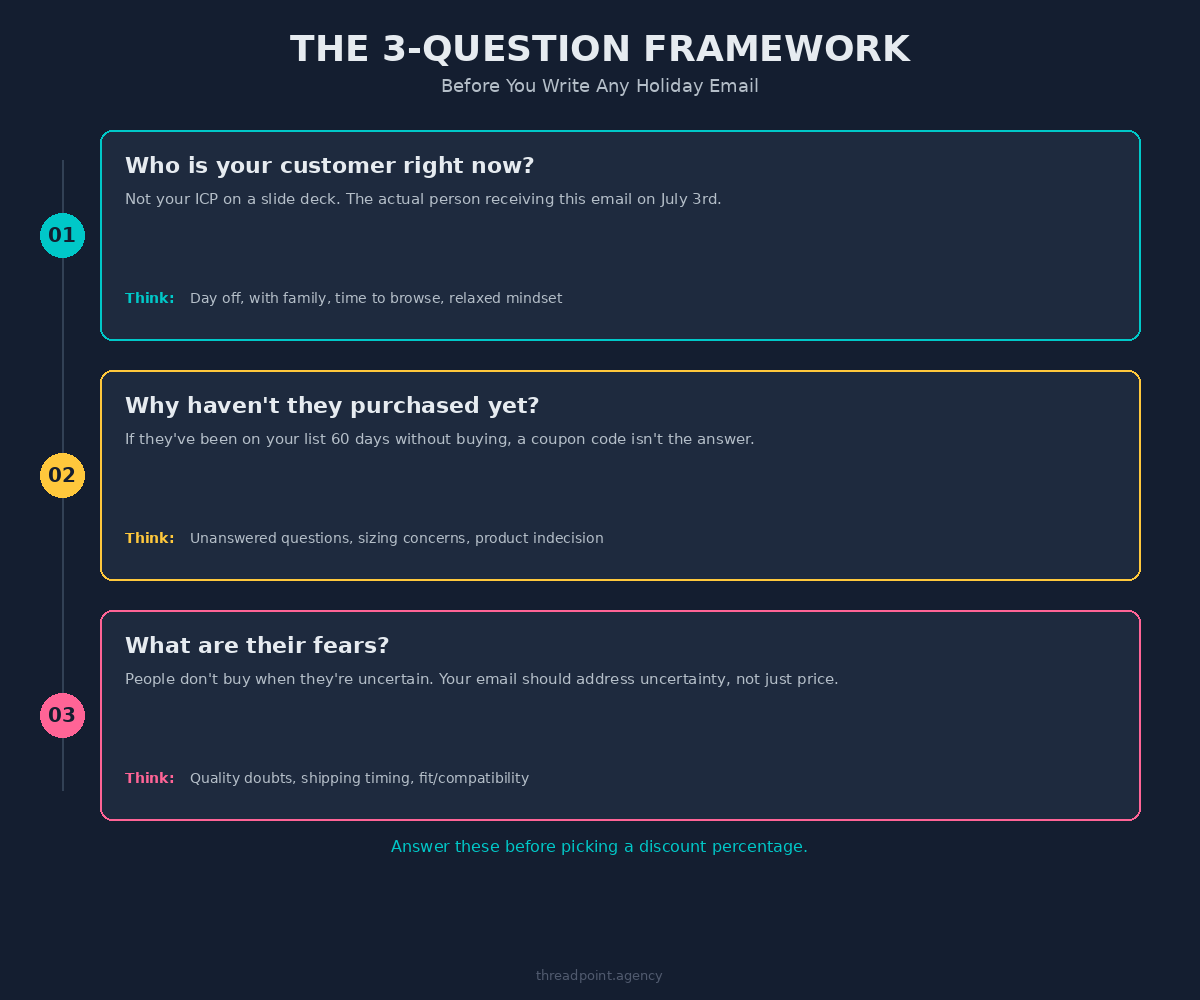
Here's the framework we use with our clients when any holiday rolls around - July 4th included. Before you decide what to offer, answer three questions:
Who is your customer right now? Not your ICP on a slide deck. The actual person receiving this email on July 3rd. What's their day look like? For most DTC brands, it's someone who has a day off, is probably with family or friends, and has time to actually think about purchases they've been putting off.
Why haven't they purchased yet? If someone's been on your list for 60 days and hasn't bought, a 20%-off code isn't the answer. Usually there's a question they haven't gotten answered, a product they can't decide between, or a concern - shipping time, sizing, quality - that you haven't addressed. Your July 4th email should answer that question, not just throw a discount at it.
What are their fears? This sounds dramatic, but it's practical. People don't buy when they're uncertain. Will this actually fit? Is the quality worth the price? Will this show up before my trip? If your July 4th email addresses uncertainty instead of just offering a price cut, you'll convert people who never would've responded to a promo.
What This Looks Like in Practice
Let's say you're a skincare brand. Your typical July 4th email might be "Celebrate with 20% off sitewide." Fine. Boring. And your margin on that is rough because skincare margins are already tight.
Instead, think about what your customer is actually doing July 4th weekend. They're outside. They're probably getting more sun than usual. Their skin routine is probably the last thing on their mind - which means it's the perfect time to remind them why it shouldn't be.
Send an email that's genuinely useful. "Your skin is about to go through it this weekend. Here's what we'd actually do." Lead with content. Show the product in context. Make it feel like advice from a friend, not a coupon from a brand. And if you want to include an offer, make it a secondary element - not the headline.
Or say you're a food and beverage brand. Your customer is literally hosting a barbecue. You don't need a sale. You need a "what to serve this weekend" email that features your products naturally. The conversion happens because you showed up at exactly the right moment with exactly the right framing.
The Post-Holiday Email Matters More Than You Think
Here's something most brands miss entirely. Tuesday after July 4th is one of the most underrated sends of the year.
Everyone's back at their desk. The holiday glow is fading. They're scrolling through their inbox catching up. And they're in that "back to reality" mindset where they're more receptive to making decisions they've been sitting on.
The brands we work with that win July 4th aren't just the ones who have a good holiday send. They're the ones who have a plan for the Tuesday and Wednesday after. A follow-up that references the weekend. A "you were looking at this" email that hits while the purchase intent is still warm. A piece of content that says "summer's not over - here's what you need for the rest of it."
That post-holiday window is where the real conversions happen, and almost nobody plans for it.
Use the Discount as a Scalpel, Not a Sledgehammer
None of this means you can't discount on July 4th. You absolutely can. But be surgical about it.
Your engaged-but-haven't-purchased segment? Give them the offer. They've earned it, and the discount might be the nudge they need.
Your repeat buyers who purchased in the last 30 days? They don't need a sale. Send them something useful or entertaining.
Your lapsed subscribers who haven't opened in 90 days? A 25%-off email isn't going to wake them up. It's just going to lower your deliverability.
The point isn't to never discount. It's to stop using the discount as the strategy when you should be using it as one tool within a strategy.
The Bottom Line
July 4th works when you stop treating it like a mini Black Friday and start treating it like what it actually is - a weekend where your customers are relaxed, available, and genuinely open to hearing from you. The brands that win this holiday aren't the ones with the biggest discount. They're the ones who show up with the right message at the right moment.
Strategy beats discounts every time. Especially when your customer is sitting by the pool with nowhere to be and their phone in their hand.


