Black Friday is November 27 this year. As I'm writing this, that's 59 days out. And right now my inbox is full of BFCM calendars: twelve sends, five phases, subject lines already drafted.
That stuff is fine. But it's the easy part, and it's not what decides whether your Black Friday email works. What decides it is what Gmail, Yahoo and Microsoft think of your sending domain on the morning of the 27th. And that gets set by what you send in October, not by what you write in November.
The mistake we see every year
A brand spends most of the year mailing its engaged list. Say that's the people who opened or clicked in the last 60 to 90 days. Then BFCM week comes, somebody says "it's the biggest week of the year, send it to everyone," and the campaign goes out to the whole list. That includes the people who haven't opened anything since last Black Friday.
Those people aren't going to buy because it's Black Friday. A lot of them never see it, and the ones who do are much more likely to hit "report spam" than to click. Inbox providers see a sudden volume spike from your domain, lower engagement across the board and a jump in complaints, all on the same day. So they start throttling you or routing you to spam. That's exactly the week you can least afford it, and it usually drags your engaged subscribers down with everyone else.
The number that actually matters
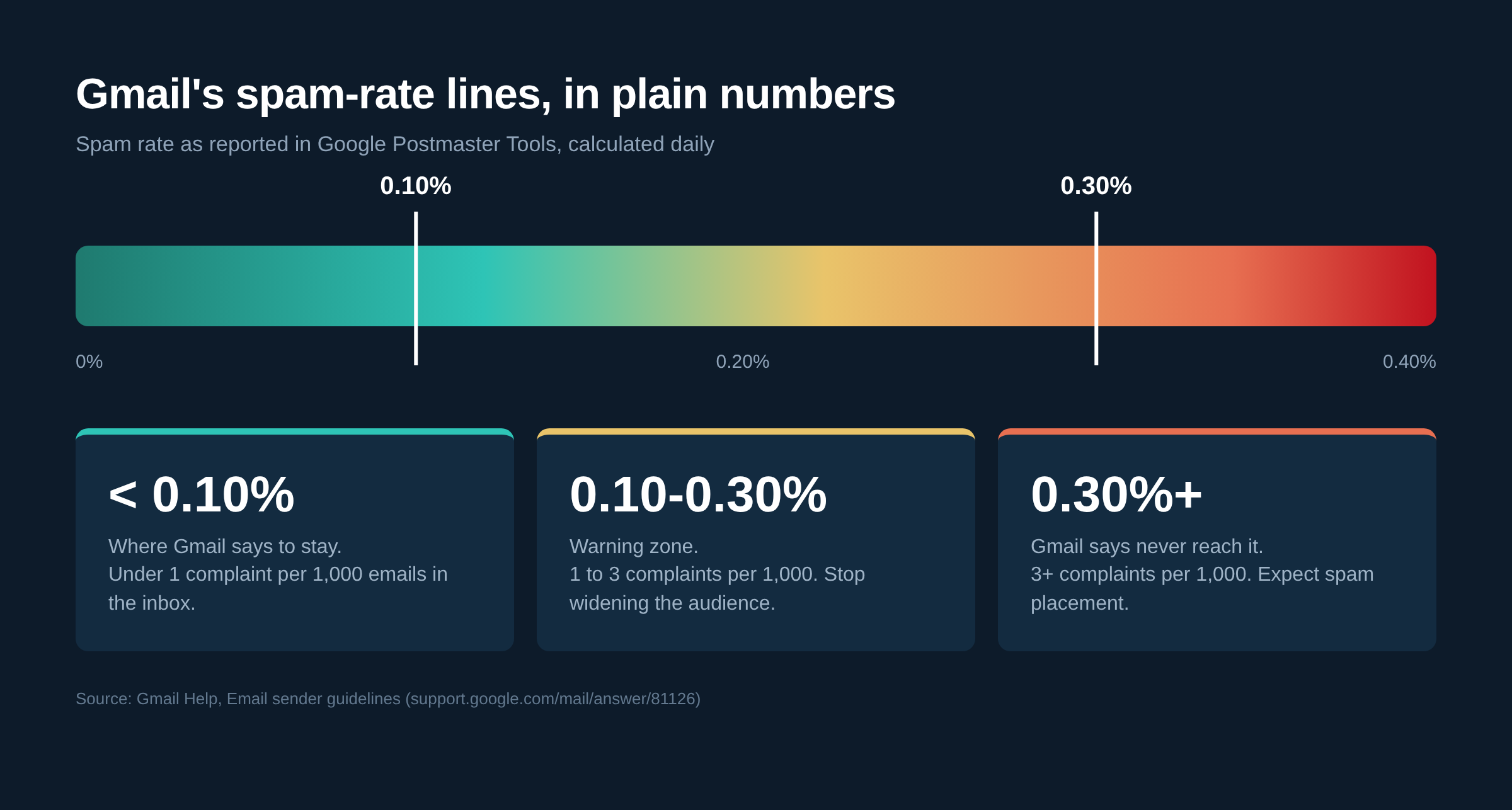
Gmail is pretty clear about this. Its sender guidelines say to keep the spam rate reported in Postmaster Tools below 0.10% and to avoid ever reaching 0.30%. Gmail calculates that rate daily. So one bad send can put you over the line.
To put 0.30% in plain terms, that's 3 complaints for every 1,000 emails that reach the inbox. A list of people who haven't heard from you in months can get there fast. Your subject line can't fix that. The only thing that fixes it is who you send to, and how gradually you build up to sending to more of them.
What 60 days out actually looks like in Klaviyo
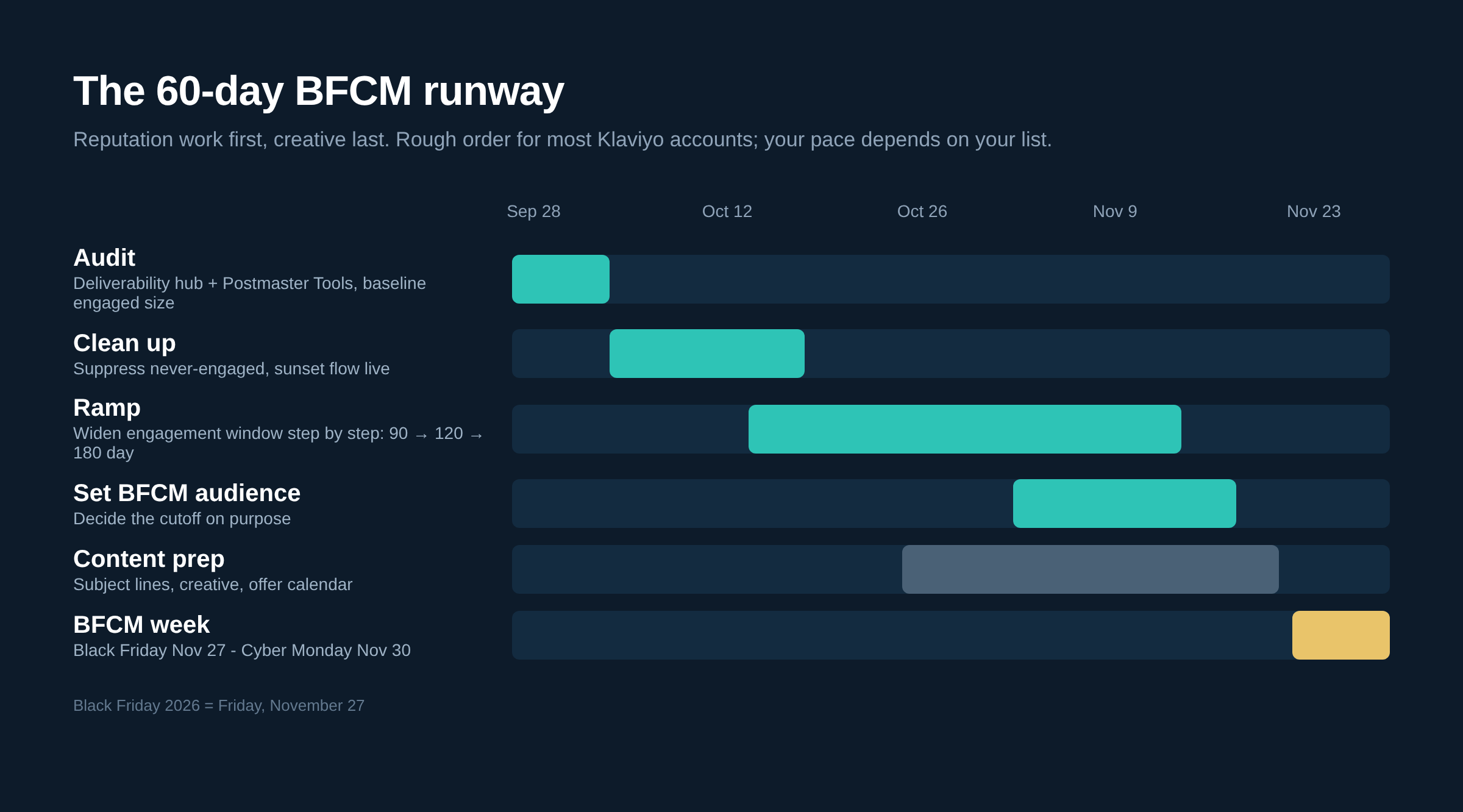
Here's roughly how I'd lay out the next eight weeks for most accounts. Every list is different, so the windows and pace will shift, but the order matters more than the exact dates.
This week: find out where you actually stand. Open the deliverability hub in Klaviyo and look at your recent campaigns and flows. Klaviyo marks each metric as Healthy, Room for improvement or Needs attention. Then check Google Postmaster Tools for your sending domain. Also, figure out how big your engaged audience really is, meaning the people you mail every week who actually open and click. That's your baseline for the ramp.
Early October: clean up the bottom of the list. Profiles that have never engaged should be suppressed. That's Klaviyo's own recommended first step for low open rates. If you don't have a sunset flow running, build one now. It gives long-unengaged profiles one last chance to engage before you stop mailing them. One caveat: if your reputation is already hurting, Klaviyo warns that sunset, winback and re-engagement flows can make things worse because they get low engagement. In that case, repair first and sunset later.
Mid October to mid November: ramp up slowly. This is the part people skip. Klaviyo's BFCM guidance is to gradually increase sending volume until you reach the full audience you plan to mail on the day. In practice, that means widening your engagement window a step at a time. If your normal campaigns go to 60-day engaged, the next step might be 90, then 120, then 180. At each step, check the deliverability numbers before widening again. If complaints or bounces jump, go back a step and hold there. And keep the content recognizable. A sudden rebrand or a totally new template in the same weeks you're adding volume gives inbox providers two reasons to be suspicious instead of one.
Early November: decide who gets BFCM, on purpose. By now you know how far out your list can go before engagement falls apart. That's your BFCM audience. Anyone past that line doesn't get the Black Friday campaign. That's not a loss. They weren't going to buy it from the spam folder anyway.
BFCM week: don't stack everything at once. Promo campaigns, early-access sends, abandoned cart and browse abandonment all get busier at the same time. Smart Sending (16 hours by default for email) is what keeps one person from getting four emails in an afternoon. Decide ahead of time where you want it on and where you're comfortable overriding it. Don't find out on Friday morning.
"But the full list is where the extra revenue is"
I get why it feels that way. More people mailed means more revenue, at least on paper. But in the accounts we work in, the revenue from a BFCM send comes overwhelmingly from people who were already engaged. The deep unengaged tail adds a little volume and a lot of risk. If you trade inbox placement with your best customers for a few extra orders from people who forgot they signed up, you've made a bad trade.
Where the full list does pay off is when you've warmed up to it. A brand that spends October building from 90-day to 180-day engaged can mail a much bigger audience on Black Friday and keep landing in the inbox. That's why the work has to start now. Warming is slow on purpose, and you can't cram it into the week before.
The short version
If you only do three things this week:
- Look at your Klaviyo deliverability hub and Google Postmaster Tools, and write down your current spam rate and engaged audience size.
- Suppress never-engaged profiles and get a sunset flow live, unless your reputation is already in trouble.
- Put the ramp on the calendar. Pencil in each step of widening your engagement window between now and mid November, with a check between each one.
The subject lines can wait until the end of October. Your sending reputation can't.


