My wife has this system. I don't know when she set it up or how it works, but somehow she always has backup shampoo under the sink before the current bottle runs out. There's never a gap. It's impressive.
I am not that person.
I'll use a bottle of body wash until it's completely, absolutely empty. I'm talking tilting it upside down and waiting. And then I'll think "oh right, I need more of that" - usually while I'm standing in the shower, dripping wet, with no backup plan. By then it's too late. I'm not buying from the brand that just ran out. I'm buying whatever's fastest.
That gap between "running low" and "completely gone" is where most men's grooming brands lose the sale. And their emails have no idea it's happening.
Everyone Needs the Reminder. Men Just Need It More.
Let's be real - women are generally much better at this than men. They notice when something's running low. They reorder ahead of time. But even then, they still need that nudge. Life is busy. Between work, kids, travel, and everything else going on, even the most organized person forgets to restock their face wash. That's why replenishment flows work for everyone. But for men's grooming specifically? They're not optional. They're essential.
Guys don't just forget occasionally. We wait until the product is gone, gone. And by then the window for that email reminder has already passed.
So the entire email strategy for a men's grooming brand has to work backwards from that behavior. Not "send a restock email at 30 days." It's "figure out when the product is about 70% used up and trigger the reminder before they've mentally moved on."
Not All Products Run Out at the Same Rate
This is where most brands mess up. They set one replenishment timer - maybe 30 days, maybe 45 - and apply it to everything. But a bottle of beard oil and a stick of deodorant don't have the same lifespan. Not even close.
Here's roughly what we see across the grooming accounts we've worked with:
- Beard oil: Lasts 2-3 months for most guys. Small amount per use, not daily for everyone.
- Body wash: 4-6 weeks, but that drops hard in summer.
- Shampoo: Similar to body wash. Maybe slightly longer if they're not washing every day.
- Deodorant: 3-4 weeks in winter. Half that in summer.
- Face wash/cleanser: 6-8 weeks for most formulas.
- Hair styling product: Highly variable - 6 weeks to 3+ months depending on hair length and routine.
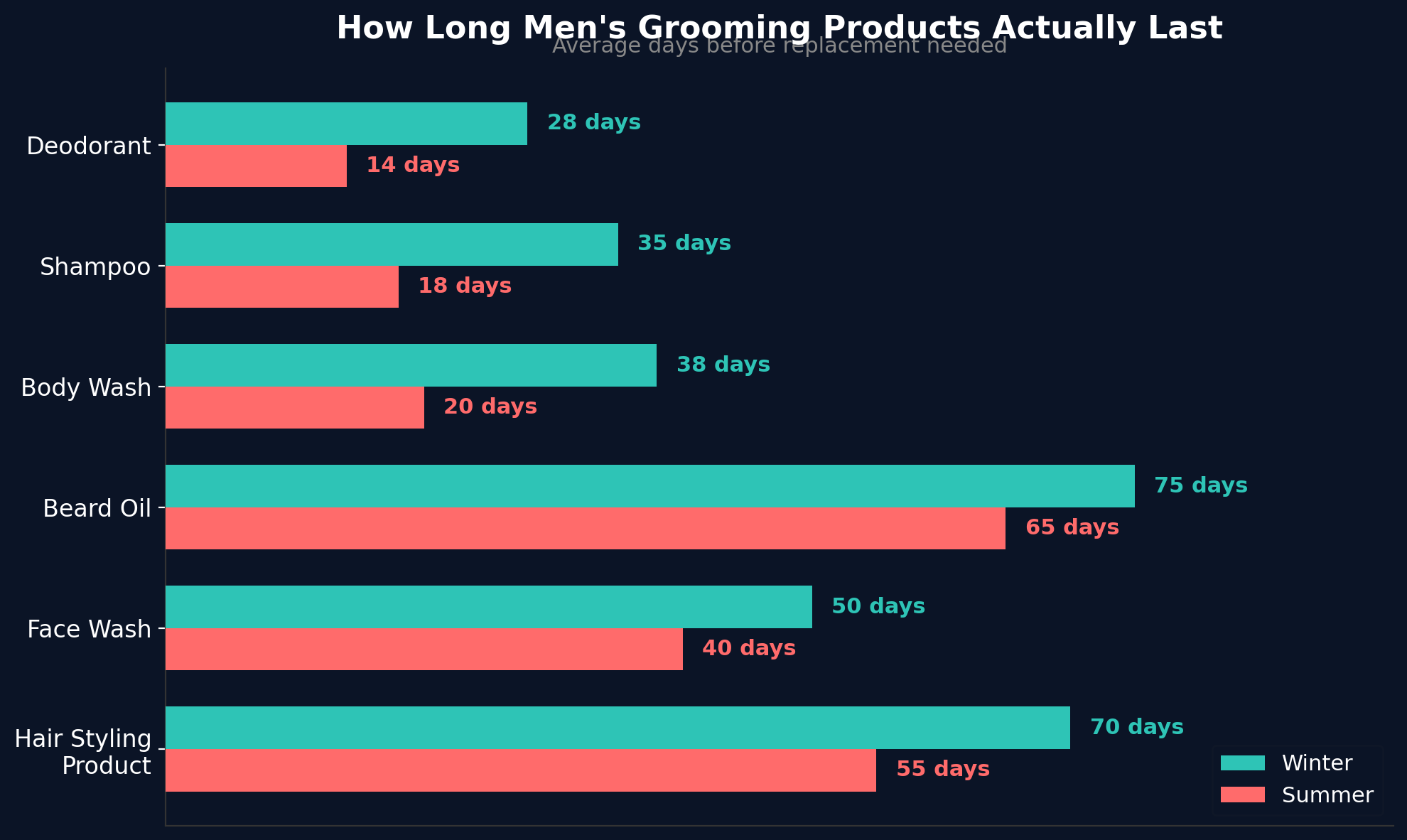
If you're sending the same restock email for deodorant and beard oil on the same timeline, you're either too early for one or way too late for the other. Probably both.
The fix is actually pretty straightforward in Klaviyo. Set up separate replenishment flows triggered by purchase, with different time delays per product category. It's more flows to build, but each one can be short - two or three emails max. The first email is the nudge ("running low?"), the second is the push ("still have some left in stock"), and if needed, a third with a small incentive to get them off the fence.
Summer Changes Everything
This is the part that most brands completely ignore. Seasonality doesn't just change what people buy - it changes how fast they use what they already bought.
I play volleyball every week in the summer. Between beach sessions, workouts, and just being outside more, my typical summer day can look something like: wake up, maybe shower, head to the beach, come back, shower. Maybe hit an actual workout after that. Come back, shower again. Then clean up to go out for dinner. That's potentially two or three showers in a single day.
My body wash in July lasts maybe half as long as it does in January. Same with shampoo. Deodorant goes even faster - in the summer, I'm reapplying constantly. The usage rate for these products basically doubles.
And it's not just me. Anybody who's active in the summer - working out more, going to cookouts, spending time outside - is going through products significantly faster. So the brands that keep their replenishment flows on the same static 30-day timer year-round are missing a massive chunk of revenue.
The smart move is adjusting your flow timing seasonally. In Klaviyo, you can use date-based conditional splits to shorten your replenishment delays from May through September. A body wash flow that triggers at 35 days in the winter should probably trigger at 18-20 days in the summer. It's not complicated to set up. Most brands just don't think about it.
The Real Play Is Subscription Conversion
Here's where this all connects to actual revenue growth. The entire point of a good replenishment flow isn't just to sell another bottle. It's to convert one-time buyers into subscribers.
Think about it. If a guy already knows he's going to need more body wash in a month, and you can show up at exactly the right time with a message like "hey, you're probably running low - want to set this up so you never have to think about it again?" - that's a natural transition. It doesn't feel salesy. It feels helpful.
The first 90 days after a purchase is the subscription conversion window. After that, the customer either forgot about you, found something else, or is already buying on their own schedule without your email making the case for subscribing.
So the replenishment flow structure should look something like this:
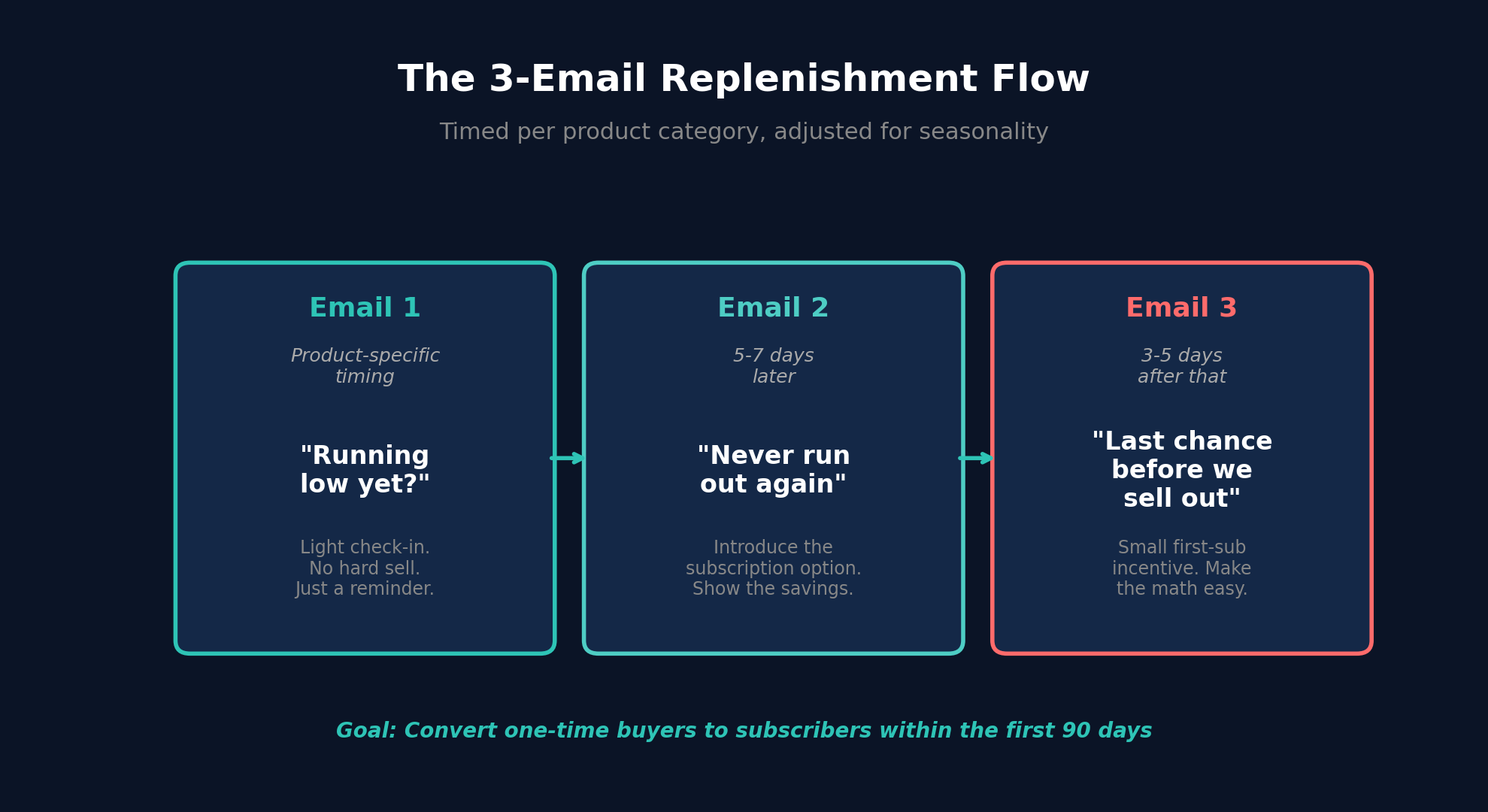
- Email 1 (product-specific timing): Light check-in. "Running low yet?" No hard sell. Just a reminder that you exist and they might need more.
- Email 2 (5-7 days later): Introduce the subscription option. Show the savings, show the convenience. "Never run out again" is a real message for this audience because they literally do run out. Constantly.
- Email 3 (3-5 days after that): Last nudge before the window closes. Maybe a small first-subscription incentive. Not a huge discount - just enough to make the math easy.
That three-email sequence, timed correctly per product and adjusted for seasonality, is doing more for LTV than your entire campaign calendar.
Why Men Actually Read These Emails
There's a misconception that men don't engage with marketing emails. That's not what we see - at least not for grooming products. Men's grooming has some of the highest open rates in DTC, partly because the purchase cycle is so regular and partly because guys actually want to know when they need to reorder.
The key is keeping the emails useful and short. Don't write a three-paragraph narrative about the brand's mission. Just tell them they're probably running low and make reordering easy. One CTA, one product, done.
This audience responds well to direct, helpful communication. They don't need to be convinced to buy your product again - they've already decided they like it. They just need the reminder at the right time. Your email is that reminder.
This Framework Works Across Beauty and Grooming
The replenishment timing approach works across the beauty and grooming space broadly. Hair care brands, skincare brands, even clean beauty brands all have consumable products with predictable usage cycles. The specifics change - a serum lasts longer than a cleanser, a hair mask gets used less often than a daily shampoo - but the underlying principle is the same.
If you sell something people use up, and you're not timing your restock emails to when they're actually running low, you're leaving money on the table. And if you're not adjusting those timers for seasonality, you're leaving even more.
We're actually building out a replenishment flow system for one of our clients right now, and it's consistently one of the highest-ROI flows we set up. Not because it's flashy or complicated, but because it solves a real problem at exactly the right time.
That's what good email marketing is. Showing up when someone actually needs you.


