Shopify just rolled out its AI-native checkout to Plus merchants, and the early numbers are genuinely impressive. Beta merchants are seeing a 23% reduction in cart abandonment. One fashion retailer saw their completion rate jump from 67% to 82%. Across the broader cohort, Shopify is reporting a 6.3% checkout completion lift and a 4.1% bump in average order value.
That's all great news. Better checkout, more conversions, higher AOV. Everyone wins.
But here's what nobody's talking about yet: if 23% fewer people are abandoning checkout, that's 23% fewer people entering your abandoned cart flow. And for most brands on Klaviyo, that flow is the single highest-revenue automated sequence in the entire program.
So your best flow is about to get smaller. And if you're not ready for it, your next monthly report is going to look like something broke.
The Math That's About to Change
Let's walk through what this actually looks like.
Say you're a Shopify Plus brand doing $5M a year. Your abandoned cart flow probably recovers somewhere between $15,000 and $40,000 a month, depending on your product, your price point, and how well your flow is built. Industry benchmarks put abandoned cart email at a $3.65 revenue per recipient on average, with the top 10% hitting $28.89.
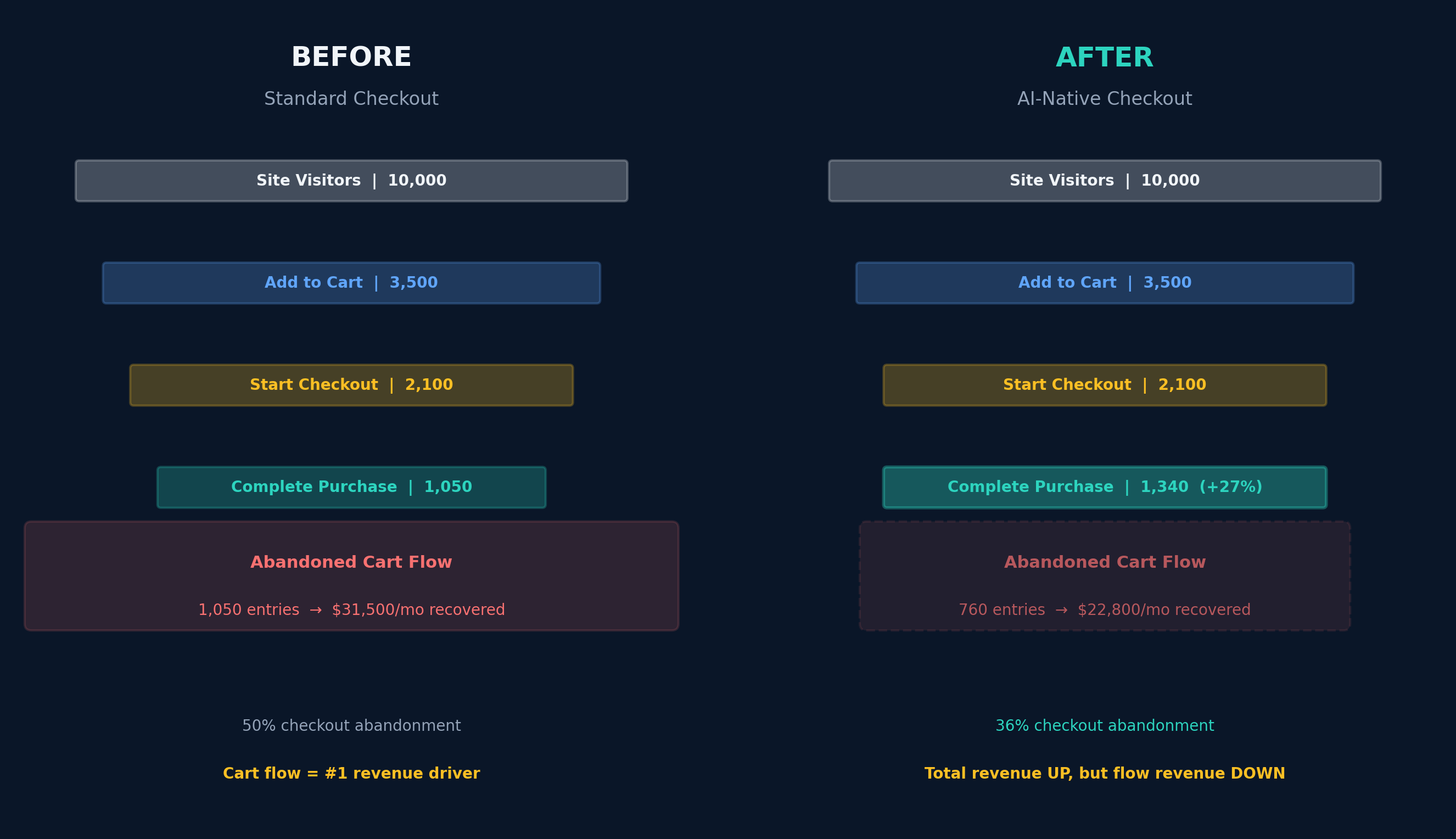
Now Shopify's AI checkout reduces your abandonment rate by 20%. That means roughly 20% fewer people enter the flow. If your flow was recovering $30,000 a month, you might see that drop to $24,000.
Did something break? No. You're actually making more money overall because those people are converting at checkout instead of bouncing and getting recovered by email three hours later. The total revenue is up. But the flow revenue line item on your Klaviyo dashboard is down.
And if the only thing you're looking at is flow revenue, it looks like your email program got worse. It didn't. The funnel just shifted upstream.
Your Dashboard Is Going to Lie to You
This is the part that matters for how you report and how you think about your program.
When checkout conversion improves, a few things happen simultaneously:
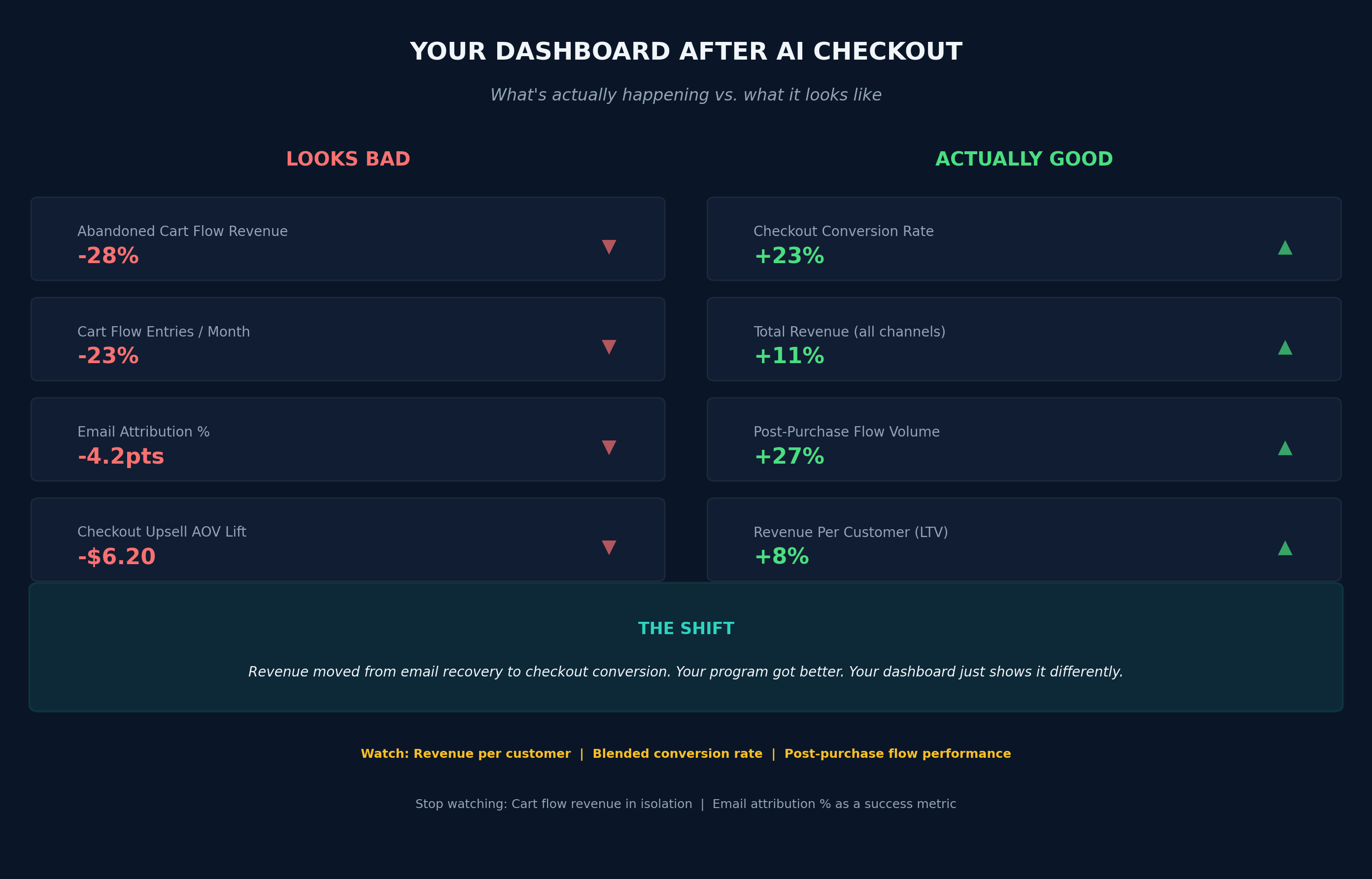
Abandoned cart flow revenue drops. Fewer entries, fewer recoveries, lower total. This is not a problem. This is the system working.
Browse abandonment becomes relatively more important. The people who used to abandon at checkout and get recovered by cart emails are now converting. But the people who browsed and never added to cart? They're still out there. Your browse abandonment flow just became a bigger piece of the puzzle.
Post-purchase flow volume goes up. More people completing checkout means more people entering your post-purchase sequences. If those flows are underdeveloped (and for most brands, they are), you're leaving money on the table right when volume is increasing.
Your overall email attribution percentage might dip. If more revenue is happening at the point of checkout without an email touch, the percentage of revenue "attributed to email" goes down even though the business is healthier. This is a reporting artifact, not a performance problem.
The brands that panic are the ones looking at one line item. The brands that win are the ones looking at the full picture.
Shopify Is Also Rearranging Your Checkout
There's a second piece to this that's getting less attention.
Shopify's AI layer isn't just speeding up checkout. It's actively repositioning and, in some cases, suppressing third-party checkout app blocks. That upsell widget you installed six months ago? Shopify's AI might decide it's hurting conversion and move it below the fold or remove it entirely.
Shopify has set an August 18 audit deadline for Checkout Extensibility app placements. If you're running checkout upsell apps, trust badge apps, or custom shipping widgets, you need to check whether they're going to survive the AI's optimization layer.
This means some of the AOV lift you were getting from checkout upsells might disappear. Which, again, shifts the math downstream. If your checkout upsell was adding $8 to average order value but Shopify's AI decides it's hurting completion rates, you might lose the upsell but gain the conversion. Net positive for revenue, but your AOV line item drops.
Where does that upsell opportunity go? Into your post-purchase flow. Into your email program. Into the nurture sequence that happens after the sale.
What Smart Brands Should Actually Do
This isn't a crisis. It's a shift. But it requires adjusting how you think about your flows and your reporting.
Rebalance your flow portfolio. If your abandoned cart flow has been doing all the heavy lifting, this is the push to build out the rest of your program. Browse abandonment, post-purchase, winback, replenishment - these flows become more important as cart recovery volume shrinks.
Stop reporting flow revenue in isolation. Start looking at total revenue per customer, blended conversion rate across the full funnel, and revenue per recipient across all flows. A drop in cart flow revenue that coincides with a rise in checkout conversion is a win, not a loss.
Audit your checkout apps before August 18. If you're running upsell or cross-sell apps at checkout, test them in a staging environment with Shopify's AI layer active. Find out now if they're going to get repositioned or suppressed, not after it happens.
Invest in post-purchase. The volume increase in post-purchase flows is real and most brands aren't ready for it. If your post-purchase sequence is two emails - a shipping confirmation and a "leave us a review" message - you're missing the biggest opportunity created by this checkout upgrade.
Update your reporting narrative. If you're an agency presenting monthly reports, or a founder reviewing your email dashboard, build in context for the checkout change. A client or a board member seeing "abandoned cart revenue down 20%" needs to also see "checkout conversion up 23%" in the same breath. The story is different when you tell the whole thing.
This Is What Staying Ahead Actually Looks Like
Every few months, something changes in the ecommerce stack. Meta changes attribution. Google changes how AI Overviews surface search results. Shopify changes how checkout works. And every time, the downstream effects ripple into your email program in ways that aren't obvious until you see the numbers shift.
The brands that struggle are the ones who react to dashboard line items. The brands that don't are the ones whose team - whether in-house or agency - understands how these pieces connect and adjusts before the numbers look wrong.
Shopify's AI checkout is a good thing. It's going to make a lot of brands more money. But it's also going to make a lot of email dashboards look confusing for a few months. Knowing the difference between a problem and a shift is what separates good retention programs from reactive ones.


